Analytics Platforms Reshaping Talent Assessment in Professional Basketball, Baseball, and Soccer
Written by Morgan Washington · Aug 23, 2026
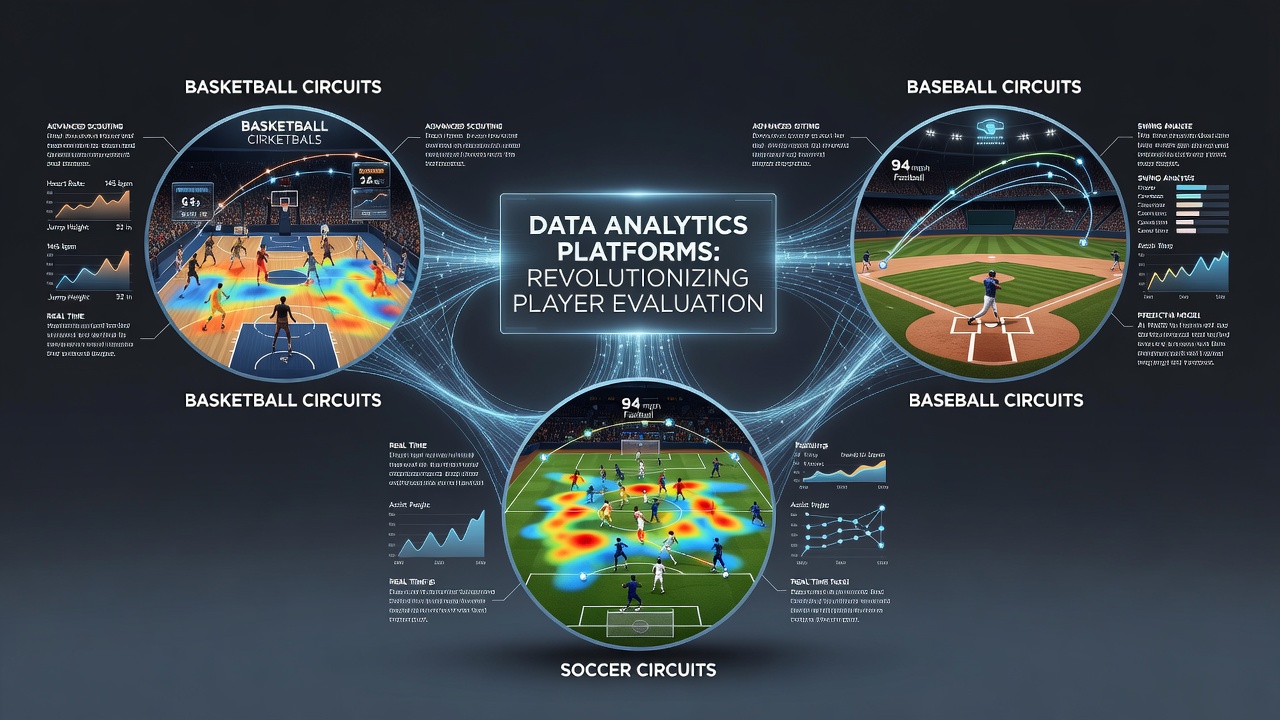
Analytics Platforms Reshaping Talent Assessment in Professional Basketball, Baseball, and Soccer
Professional sports organizations have integrated data analytics platforms into scouting and roster decisions at an accelerated pace since the mid-2010s, and the trend shows no signs of slowing as of August 2026. Teams across basketball, baseball, and soccer now rely on specialized software that processes tracking data, biometric readings, and historical performance records to evaluate athletes beyond traditional box-score statistics.
Basketball Evaluation Shifts
NBA franchises use platforms that combine optical tracking with machine-learning models to measure off-ball movement, defensive positioning, and shot selection efficiency. One study from the MIT Sloan Sports Analytics Conference highlighted how these systems flag players who create space for teammates even when they do not score frequently. Front offices compare these metrics against salary databases to identify undervalued contributors, while draft departments cross-reference college tracking data with professional benchmarks to reduce projection errors.
Coaches review heat maps that illustrate where a player spends most of his time on the court, allowing adjustments in defensive schemes before games begin. Data from the league's official tracking provider indicates that teams adopting these tools early recorded measurable improvements in net rating during the 2024-25 season compared with clubs slower to implement similar systems.
Baseball's Data-Driven Draft and Development
Major League Baseball organizations have layered Statcast and similar platforms onto existing scouting reports, creating multi-dimensional player profiles that include exit velocity, spin rate, and launch angle for hitters alongside release-point consistency and pitch-tunnel metrics for pitchers. These measurements help teams project future performance with greater precision than radar-gun readings alone once provided. Minor-league affiliates feed daily data streams into centralized databases so that decision-makers can monitor development trajectories in real time.
Scouts now receive automated alerts when a prospect's swing mechanics deviate from established patterns, prompting targeted video review rather than broad observations. Research published by the Society for American Baseball Research demonstrates that clubs using integrated analytics reduced first-round draft bust rates between 2018 and 2025. Pitch-framing and baserunning models further refine catcher and speed evaluations, areas previously assessed through subjective eye tests.

Soccer Clubs Adopt Positional Tracking
European and North American soccer teams employ systems from providers such as Opta and Second Spectrum that record every touch, pass completion percentage under pressure, and progressive carry distance. These datasets allow analysts to quantify pressing intensity and spatial awareness that traditional scouting notes often overlook. Bundesliga clubs, for example, integrate GPS and camera data to evaluate how midfielders transition between attacking and defensive phases during high-tempo matches.
Youth academies feed academy match footage into the same platforms used by senior squads, enabling direct comparison of physical and technical markers across age groups. UEFA technical reports from the 2024-25 campaign note that squads with dedicated analytics departments showed higher rates of successful player integration from reserve teams into first-team lineups. Injury-risk algorithms that combine workload data with historical medical records further influence contract negotiations and rotation decisions throughout the season.
Cross-Sport Patterns Emerge
While each sport maintains distinct metrics, common themes appear in how organizations structure decision-making hierarchies. Data scientists now sit alongside traditional scouts during draft and transfer meetings, translating complex models into actionable recommendations. Several franchises have created centralized analytics departments that serve multiple teams within ownership groups, standardizing evaluation language across basketball, baseball, and soccer operations.
Publicly available datasets allow independent researchers to replicate club methodologies, increasing transparency and accelerating innovation. Figures released by the National Basketball Association, Major League Baseball, and UEFA indicate steady growth in analytics staff hiring through 2026, reflecting sustained investment in these tools.
Conclusion
Data analytics platforms continue to expand their influence on player evaluation by supplying granular, objective measurements that complement human observation. Basketball, baseball, and soccer organizations apply these systems differently according to their unique rules and physical demands, yet the underlying shift toward evidence-based assessment remains consistent across circuits. As tracking technology and modeling techniques advance, teams that maintain robust data infrastructure position themselves to identify talent earlier and allocate resources more effectively.