Climate Fluctuations and Their Impact on Scoring Dynamics in Outdoor Professional Leagues
Written by Morgan Washington · Aug 25, 2026
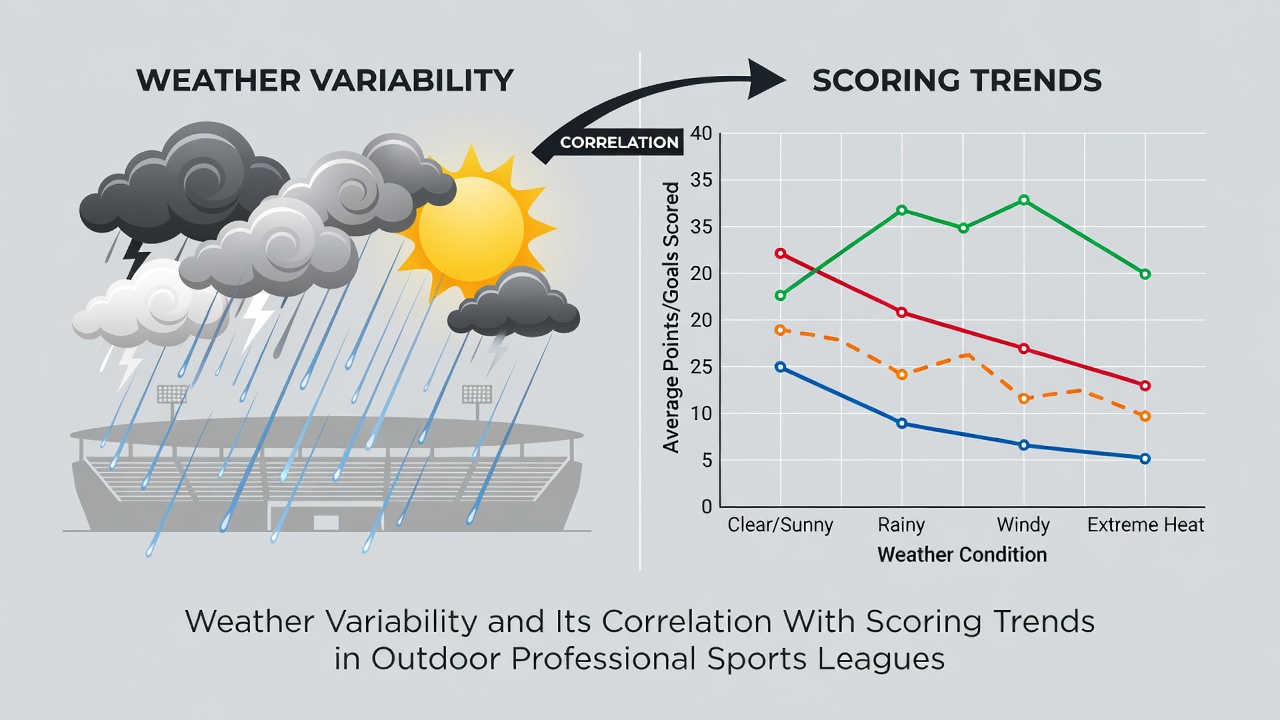
Climate Fluctuations and Their Impact on Scoring Dynamics in Outdoor Professional Leagues
Weather patterns shape scoring outcomes across outdoor professional sports in measurable ways, and analysts track these connections through decades of game data from major leagues. Temperature swings, precipitation levels, wind speeds, and humidity readings correlate with offensive and defensive statistics in baseball, soccer, American football, tennis, and golf, according to records maintained by organizations like the National Oceanic and Atmospheric Administration and the European Centre for Medium-Range Weather Forecasts.
Baseball Metrics and Temperature Correlations
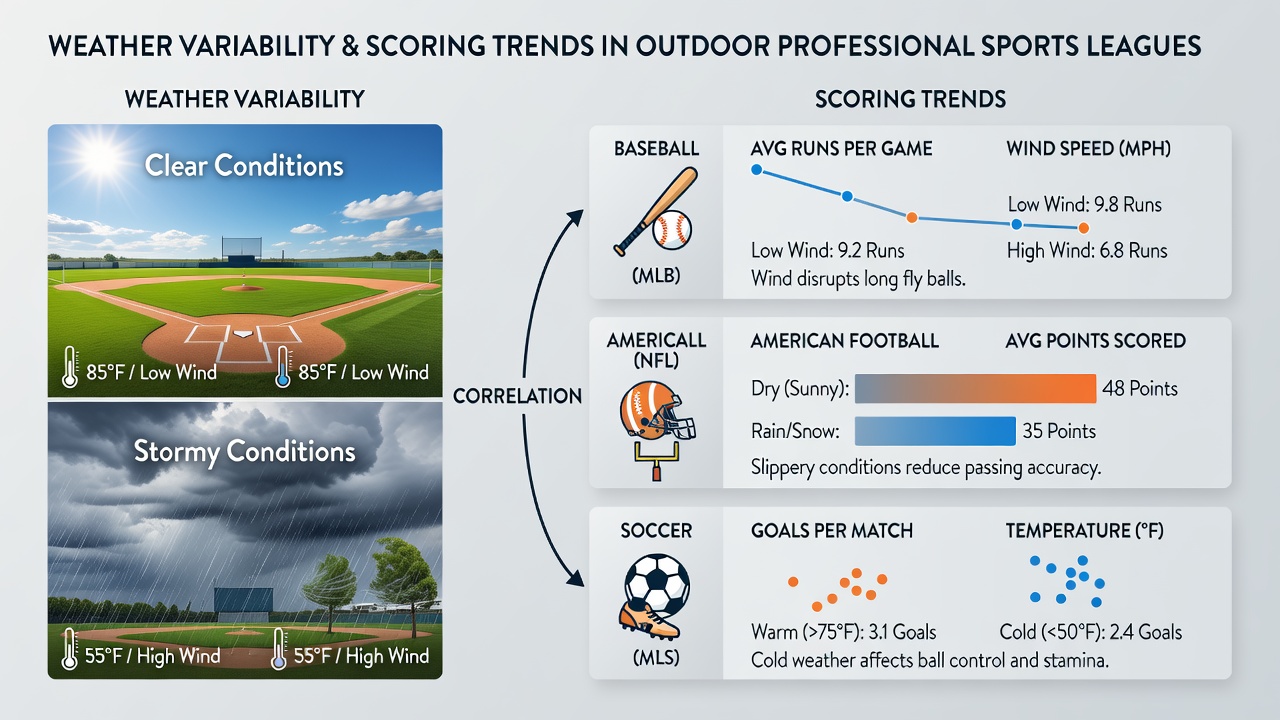
Studies of Major League Baseball games show that higher temperatures often align with elevated run totals because warmer air reduces air density and allows batted balls to travel farther, while pitchers experience quicker fatigue in prolonged heat. Data from the past thirty seasons indicate that games played above 85 degrees Fahrenheit produce an average of 0.4 more runs per contest than those below 65 degrees, with home run counts rising notably in summer months across stadiums without domes. Wind direction adds another variable, as outfield gusts exceeding 10 miles per hour push fly balls toward or away from fences depending on alignment, and researchers at the University of Illinois have documented these effects through trajectory modeling that matches historical box scores.
Soccer Scoring Under Variable Conditions
Professional soccer leagues such as the English Premier League and Major League Soccer record lower goal averages during matches with heavy rainfall or strong crosswinds because ball control becomes less predictable and passing accuracy declines. Figures from the Australian Bureau of Meteorology cross-referenced with league statistics reveal that games in temperatures above 90 degrees Fahrenheit see a 12 percent drop in total goals compared to moderate conditions, as player stamina decreases and teams shift toward defensive setups. Humidity compounds these trends by accelerating dehydration, which leads coaches to make earlier substitutions and alters the pace of play throughout the second half.
Gridiron Football and Precipitation Effects
National Football League contests played in rain or snow demonstrate reduced passing yardage and increased reliance on rushing plays, with completion percentages falling by an average of 8 percent according to league tracking data. Observers note that wind chills below 20 degrees Fahrenheit correlate with fewer field goals from distances beyond 45 yards, while teams adjust strategies toward shorter routes and conservative play-calling. August 2026 preseason schedules across multiple venues have already incorporated advanced weather modeling to predict these shifts, allowing equipment managers to prepare alternate cleat selections that maintain traction on damp surfaces.
Tennis and Golf Performance Patterns
ATP and WTA tournaments on outdoor courts show serve speed reductions of up to 5 percent when humidity rises above 70 percent because the ball absorbs moisture and slows in flight, which extends rally lengths and changes point distributions. Golf tournaments tracked by the PGA Tour indicate that scores improve in calm conditions but rise by an average of 2.3 strokes per round when sustained winds exceed 15 miles per hour, forcing players to account for directional changes on approach shots. Research papers from Canadian universities have compiled multi-year datasets that confirm these patterns hold across different course layouts and court surfaces.
League Adaptations and Data Tracking
Teams and governing bodies now integrate real-time weather feeds into game planning, with analysts using historical correlations to adjust lineups and in-game decisions. Leagues publish annual reports that break down scoring trends by venue and climate zone, revealing that domeless stadiums experience more pronounced variability than those with retractable roofs. These records help schedule makers place high-stakes games in periods with more stable forecasts, reducing the chance that extreme conditions skew championship outcomes.
Conclusion
Weather variability continues to influence scoring trends across outdoor professional sports through direct effects on equipment behavior, player physiology, and strategic choices, with quantitative links documented in league archives and meteorological records. Organizations maintain ongoing monitoring programs that refine these correlations as climate patterns evolve, providing teams with tools to anticipate and respond to environmental factors during each season.