Deciphering Algorithmic Weighting Systems That Align Seasonal Metrics Across Gridiron, Diamond, and Court Circuits
Written by Mia Long · May 28, 2026

Deciphering Algorithmic Weighting Systems That Align Seasonal Metrics Across Gridiron, Diamond, and Court Circuits
Algorithmic weighting systems have become central tools for analysts who seek to compare player and team performance across American football, baseball, and basketball, and these models adjust for differences in season length, scoring environments, and positional demands while producing standardized outputs that allow cross-league evaluation.
Core Components of Cross-Sport Weighting Models
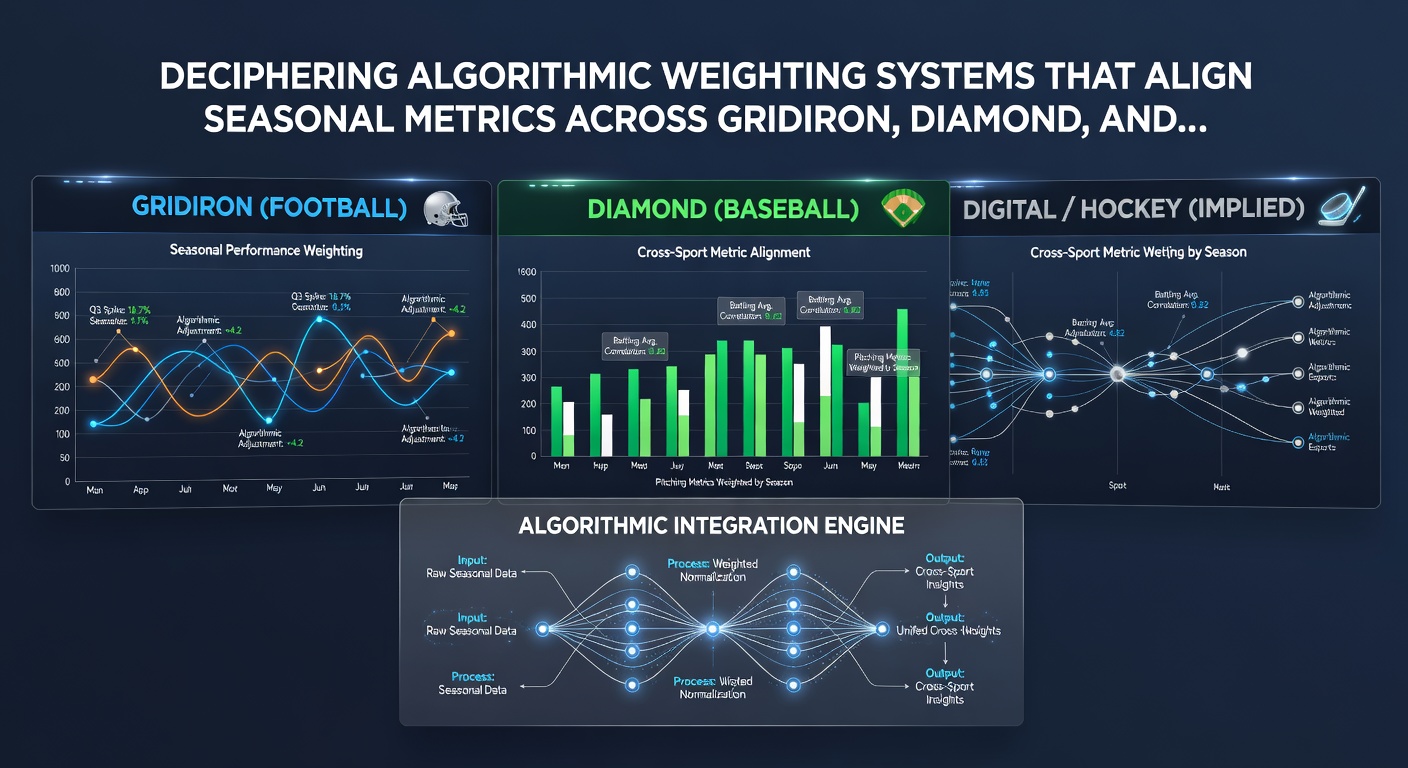
Researchers build these systems around several shared variables that include playing time adjustments, opponent strength indices, and pace corrections, and each league contributes unique data streams that feed into the same overarching equations. In gridiron circuits, models often incorporate expected points added per play alongside snap counts, whereas diamond circuits supply isolated power metrics and on-base percentages that get scaled against league averages, and court circuits contribute usage rates paired with true shooting percentages. The algorithms then apply dynamic coefficients that shift based on seasonal context, so that a high-volume scorer in one environment receives appropriate credit when compared to a defensive anchor in another.
Seasonal Alignment Techniques Used by Analysts
Alignment begins with normalization steps that convert raw box-score data into z-scores relative to each league's distribution, and these scores receive further weighting through regression models trained on historical outcomes. Analysts update coefficients monthly during active seasons, which allows May 2026 calculations to reflect early baseball trends alongside late basketball playoff adjustments and offseason football evaluations. Multi-season rolling windows help stabilize outputs because single-year variance can distort comparisons, and teams tracking these systems often integrate injury-adjusted minutes to refine the final rankings.
Gridiron Metric Integration
Football data sets emphasize situational efficiency, and weighting routines account for down-and-distance leverage as well as weather-adjusted yardage, while advanced models layer in blocking grades and coverage responsibility shares. These inputs receive multipliers derived from play-by-play archives that stretch back decades, ensuring that modern passing environments do not overwhelm earlier eras when compared against other sports.
Diamond and Court Circuit Adjustments
Baseball algorithms convert batted-ball outcomes into expected run values that scale across ballpark dimensions, and basketball frameworks apply similar logic to shot-location data while incorporating defensive assignment tracking. When these two sports feed into the same cross-league engine, the model applies sport-specific variance dampeners so that a 40-home-run season receives parity with a 30-point-per-game average after accounting for opportunities and defensive attention.
Practical Applications in Front Offices and Media
Front-office personnel use the aligned outputs to benchmark trade candidates and draft prospects, while media outlets rely on the same numbers for comparative storytelling across seasons. Several organizations publish periodic reports that detail coefficient changes, and observers note that transparent methodology helps maintain credibility when rankings shift dramatically after midseason updates. Data from Baseball Reference and similar repositories frequently serve as foundational inputs for these broader systems.
Challenges in Maintaining Model Accuracy
League rule changes introduce recurring calibration needs, and the addition of new tracking technologies creates fresh data streams that require integration testing before they influence final weights. Analysts also monitor external factors such as schedule compression during condensed seasons, because these conditions alter baseline distributions and can skew cross-sport comparisons if left unadjusted. Collaboration between statisticians from different leagues has increased in recent years, which helps surface edge cases before they affect published rankings.
Future Directions for Algorithmic Refinement
Work continues on incorporating biometric and workload data into the weighting frameworks, and early pilots suggest that recovery metrics could add another layer of context when comparing durability across physically divergent sports. Machine-learning ensembles are being tested against traditional regression approaches, and initial results indicate improved predictive power for identifying sustained excellence rather than short-term spikes. As data collection grows more granular, the core challenge remains balancing complexity with interpretability so that the aligned metrics retain practical value for decision-makers.
Conclusion
Algorithmic weighting systems continue to evolve as leagues generate richer data sets, and the ongoing effort to align seasonal metrics across gridiron, diamond, and court circuits provides a structured method for evaluating performance that transcends individual sport boundaries while respecting each circuit's distinct characteristics.