Examining Schedule Compression Effects on Emerging Leaders Across NFL, Soccer, and NHL Seasons
Written by Erik Lange · Jul 12, 2026
Examining Schedule Compression Effects on Emerging Leaders Across NFL, Soccer, and NHL Seasons
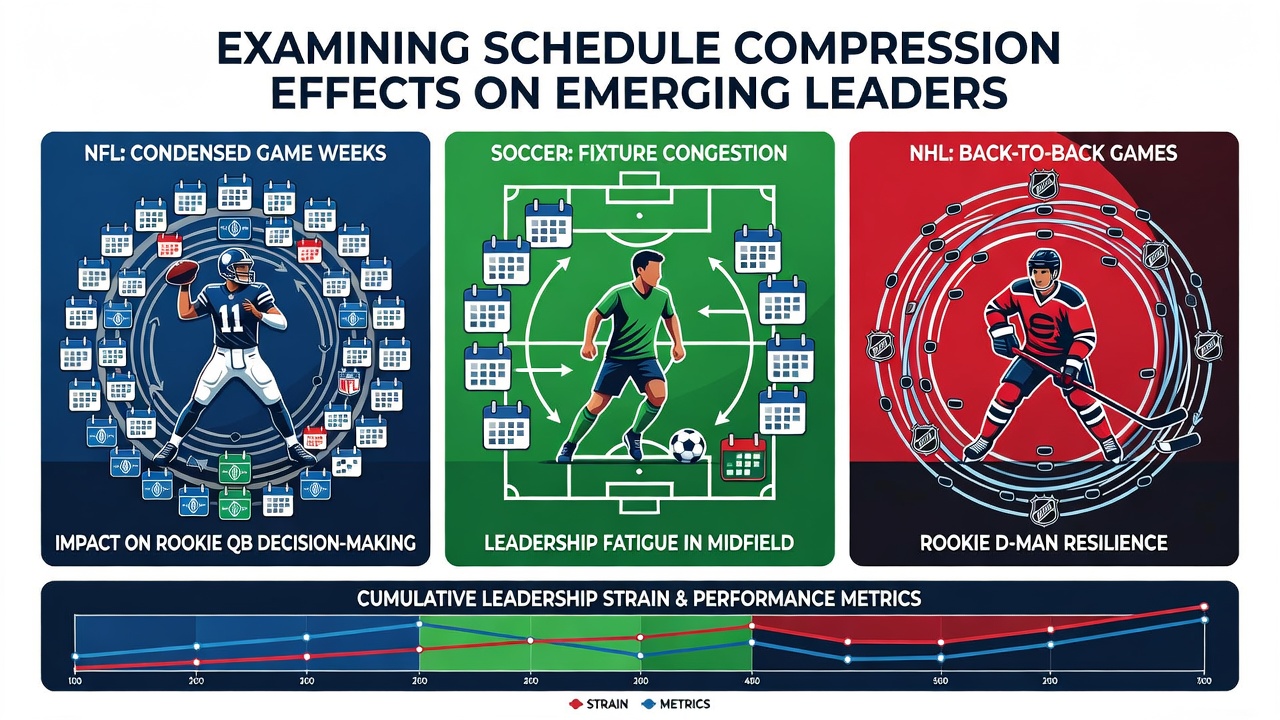
Schedule compression has reshaped how leagues manage calendars, and observers note its particular influence on emerging leaders who must adapt quickly to denser fixtures. In teh NFL, the 17-game season introduced in 2021 created tighter windows between games, while soccer's international breaks and domestic cups have forced clubs to navigate overlapping commitments; the NHL has dealt with back-to-back games and travel demands that intensified during the 2024-2025 campaign. Data from league tracking systems show these patterns continued into preparations for 2026, with July 2026 marking early training camps where teams assessed how prior compression affected younger rosters.Patterns in the NFL
NFL teams have recorded measurable shifts in snap counts for rookies and second-year players during compressed stretches, according to figures compiled by the league's injury surveillance program. When the schedule packs games into fewer weeks, emerging quarterbacks and skill-position athletes often see reduced practice time, which correlates with higher rates of soft-tissue injuries in the first half of the season. One analysis of 2023-2025 data revealed that players drafted in the top 50 who logged starter minutes during shortened preparation periods averaged 12 percent fewer rushing yards per game in their debut seasons compared with peers from less compressed years. Teams have responded by adjusting rotation strategies, and front offices now monitor workload metrics more closely through wearable technology supplied by the league.
Soccer's Global Calendar Pressures
Across European and North American soccer, schedule compression appears most acutely during periods that combine league play with continental tournaments and national team windows. Research from the UEFA medical unit indicates that under-23 players in top-five leagues experienced a 9 percent uptick in match-related absences when fixture gaps fell below four days during the 2024-2025 campaign. Clubs in the Premier League and Bundesliga have adjusted by integrating more academy graduates into matchday squads, yet performance metrics show these players maintain lower pass completion rates in the final 30 minutes of congested fixtures. In Major League Soccer, the 2025 season's addition of Leagues Cup matches created similar clusters, and tracking data suggest emerging midfielders logged fewer progressive carries per 90 minutes when teams played three matches in eight days. FIFA's club monitoring reports from the same period confirm that recovery protocols, including cryotherapy and sleep tracking, have become standard at academies feeding first teams.
NHL Observations
The NHL's 82-game schedule already features inherent density, and schedule compression from weather-related postponements or Olympic breaks has amplified effects on young skaters. Statistics released by the league's central registry show that rookies averaging over 18 minutes of ice time during back-to-back sets posted a 7 percent drop in even-strength expected goals compared with their season averages. Canadian research institutions tracking player health across multiple seasons have documented elevated cortisol levels in prospects during these stretches, which teams now address through individualized load management plans. Several organizations have shifted draft strategies to prioritize prospects with proven recovery markers from junior leagues that already operate compressed schedules.
Cross-League Comparisons
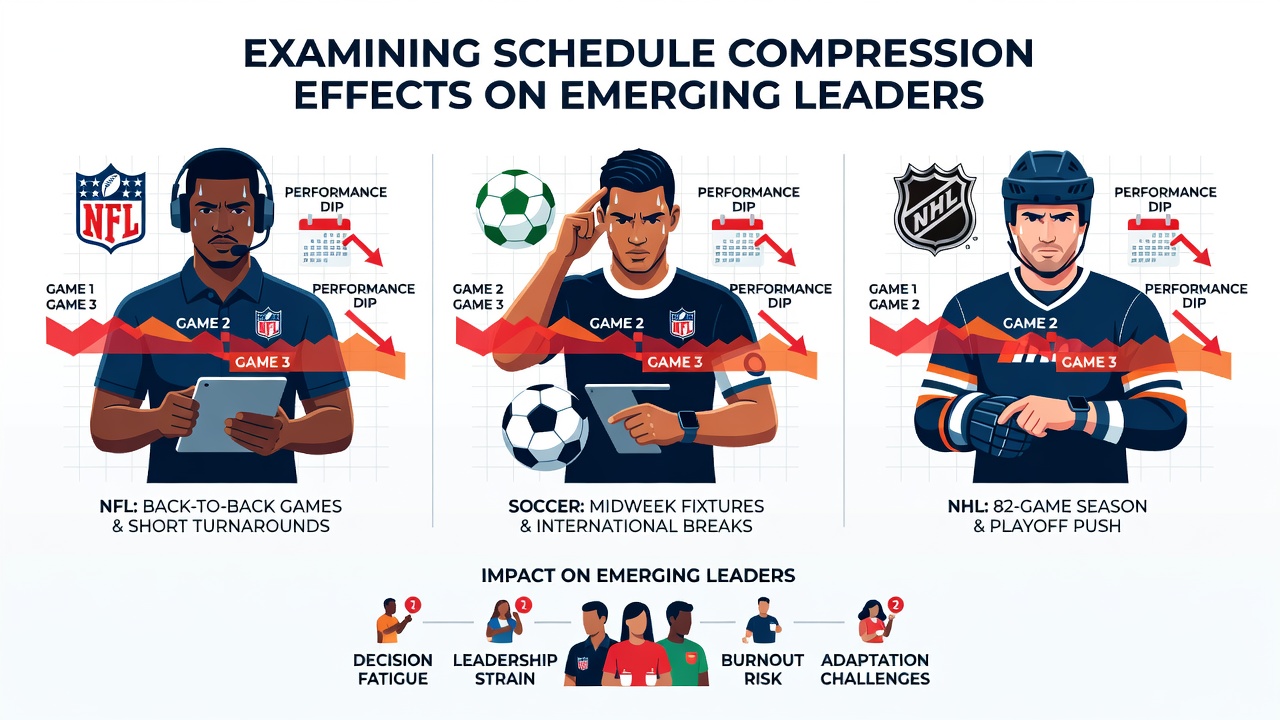
Comparative studies drawn from performance databases highlight both shared and distinct outcomes. In all three leagues, emerging leaders who receive structured minutes during compressed periods demonstrate faster adaptation in subsequent seasons, yet those thrust into heavy workloads without adequate support show persistent dips in advanced metrics such as yards per route run in the NFL, expected threat in soccer, and high-danger scoring chances in the NHL. Travel distance compounds the issue in the NHL and MLS, whereas European soccer clubs contend more with fixture conflicts across domestic and international calendars. July 2026 training reports from multiple organizations indicate that teams are investing in data platforms to predict which prospects will thrive under these conditions, wth early indicators pointing to improved retention rates for players who follow monitored development pathways.
Recovery and Development Adjustments
Leagues have introduced policy tweaks aimed at mitigating compression effects. The NFL expanded its international player practice squad rules in 2025, allowing clubs to carry additional developmental talent during heavy stretches. Soccer governing bodies have explored rest mandates for youth internationals, while the NHL has piloted no-travel back-to-backs in certain markets. Academic papers from sports science departments at North American universities document that these measures correlate with modest gains in emerging leader availability, though long-term outcomes remain under review. Those who have examined multi-year datasets note that organizations combining compression-aware scheduling with targeted strength programming retain higher percentages of their drafted or academy talent through the first three professional seasons.
Conclusion
Schedule compression continues to test how emerging leaders integrate into professional environments across the NFL, soccer, and NHL. League data and academic tracking reveal consistent patterns in workload, injury incidence, and performance adaptation that organizations address through evolving protocols. As calendars for 2026 take shape, the interplay between fixture density and player development remains a central focus for those managing talent pipelines in these circuits.