Expansion Cycles Altering Global Sports Talent Landscapes
Written by Yves Koch · Aug 2, 2026

Expansion Cycles Altering Global Sports Talent Landscapes
League expansions have accelerated across multiple continents in recent years, and data from sports governing bodies shows these moves redistribute player talent in measurable ways. Teams added in North America, Europe, and Asia pull from existing academies and independent markets, which shifts signing patterns and contract values for athletes at various career stages.
Patterns Emerging from Recent Additions
Observers note that Major League Soccer added four franchises between 2023 and 2025, and similar growth occurred in the Indian Premier League cricket circuit plus several European basketball competitions. Each new club receives an allocation of draft picks or transfer windows that draws from youth systems previously supplying established squads. Figures released by the International Olympic Committee indicate a 12 percent rise in cross-border player movements tied directly to these expansions since 2022.
Those tracking recruitment data point out that academies in South America and West Africa have seen increased inquiries from scouts representing newly formed teams. This activity coincides with adjusted salary caps that allow fresh franchises to compete for mid-tier talent without matching the highest offers from legacy clubs.
Regional Talent Flows in Practice
Take one study conducted by researchers at the University of Sydney that examined Australian rules football expansions into new territories. The analysis found measurable migration of junior players toward development programs affiliated with incoming clubs, while traditional powerhouses adjusted their scouting budgets to retain local prospects. Similar adjustments appear in volleyball leagues across Eastern Europe, where expansion franchises have signed athletes previously destined for established Russian and Polish squads.
But here's the thing: not every expansion produces uniform outcomes. Data compiled by the European Handball Federation reveals that some new teams rely more heavily on veteran signings from domestic markets, whereas others target international free agents under relaxed visa frameworks. These choices alter positional depth charts in different ways depending on the sport and geographic focus.
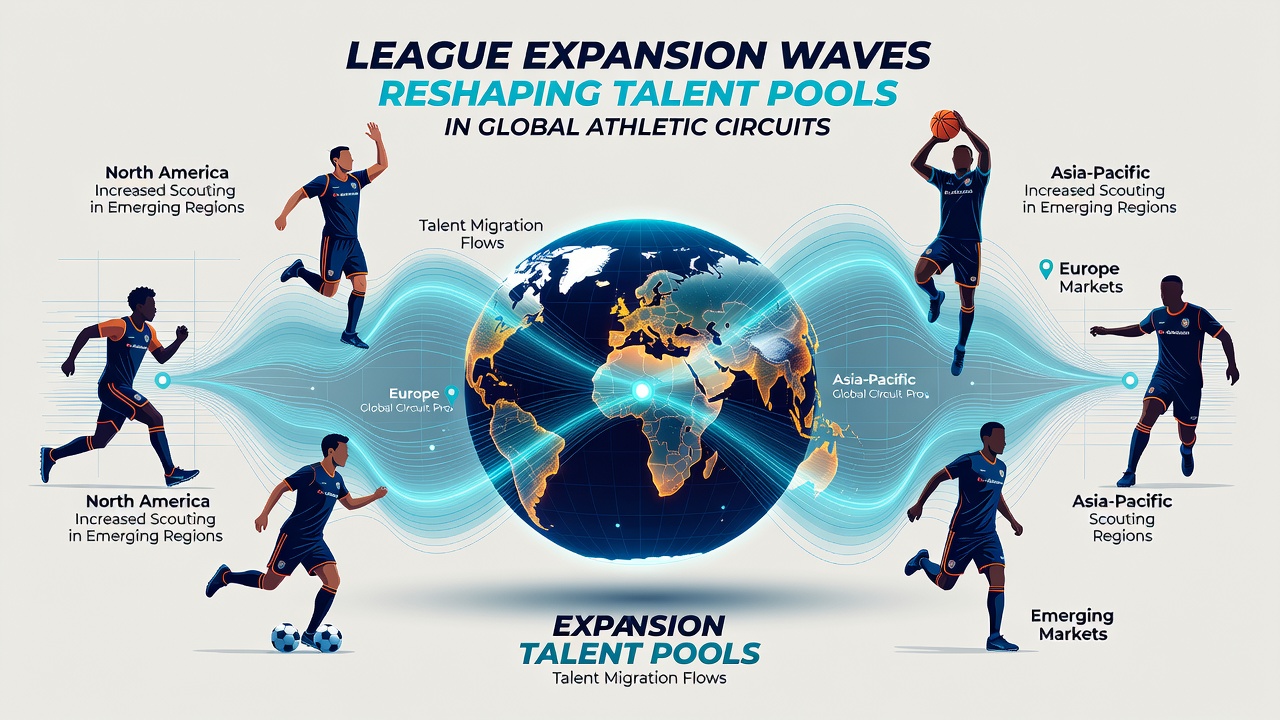
What's interesting is how these shifts interact with age demographics. Younger athletes often move earlier in their careers when expansion teams offer guaranteed playing time, while established professionals weigh contract length against relocation costs. Reports from the Canadian Sports Institute document that several expansion basketball clubs in 2025 prioritized players aged 22 to 26, creating ripple effects in lower-tier leagues that lost developmental talent.
Economic and Structural Influences
Revenue sharing models tied to new franchises change how talent is valued across circuits. A report issued by the Australian Sports Commission highlights that broadcast deals attached to league growth have increased transfer fees for certain positions, particularly goalkeepers in soccer and point guards in basketball. These adjustments influence where agents direct clients during negotiation periods.
August 2026 marks the scheduled launch window for two additional franchises in a North American ice hockey league, and preliminary roster construction already shows competition for European defensemen who previously signed with established clubs. Tracking services indicate early interest from academies in Sweden and Finland as players weigh opportunities in the expanding market.
Longer-Term Effects on Development Systems
Coaches and analysts have observed that youth programs adapt their curricula when expansion creates new pathways. Academies in Brazil, for instance, now incorporate scouting metrics that align with the positional needs of incoming teams rather than solely traditional European buyers. This realignment appears in training logs shared through federations and produces measurable changes in player skill emphasis by age 16.
Yet the process unfolds unevenly. Some regions experience talent drain while others gain from reverse migration when expansion teams release players who then return to domestic circuits with elevated experience levels. Statistics gathered by the Asian Football Confederation show modest increases in returning players to Southeast Asian leagues following short stints with new franchises in the Middle East.
Conclusion
League expansion waves continue to reshape how talent moves through global athletic systems, and ongoing roster construction for 2026 additions will provide further data points. Patterns identified in prior cycles suggest continued pressure on traditional development pipelines alongside opportunities for athletes who match the specific requirements of incoming clubs. Monitoring these movements through federation reports and academic studies offers the clearest view of resulting hierarchies across circuits.