Goaltending Gambits: How Netminders Have Flipped NHL Standings in Recent Seasons
Written by Klara Jung · Apr 19, 2026
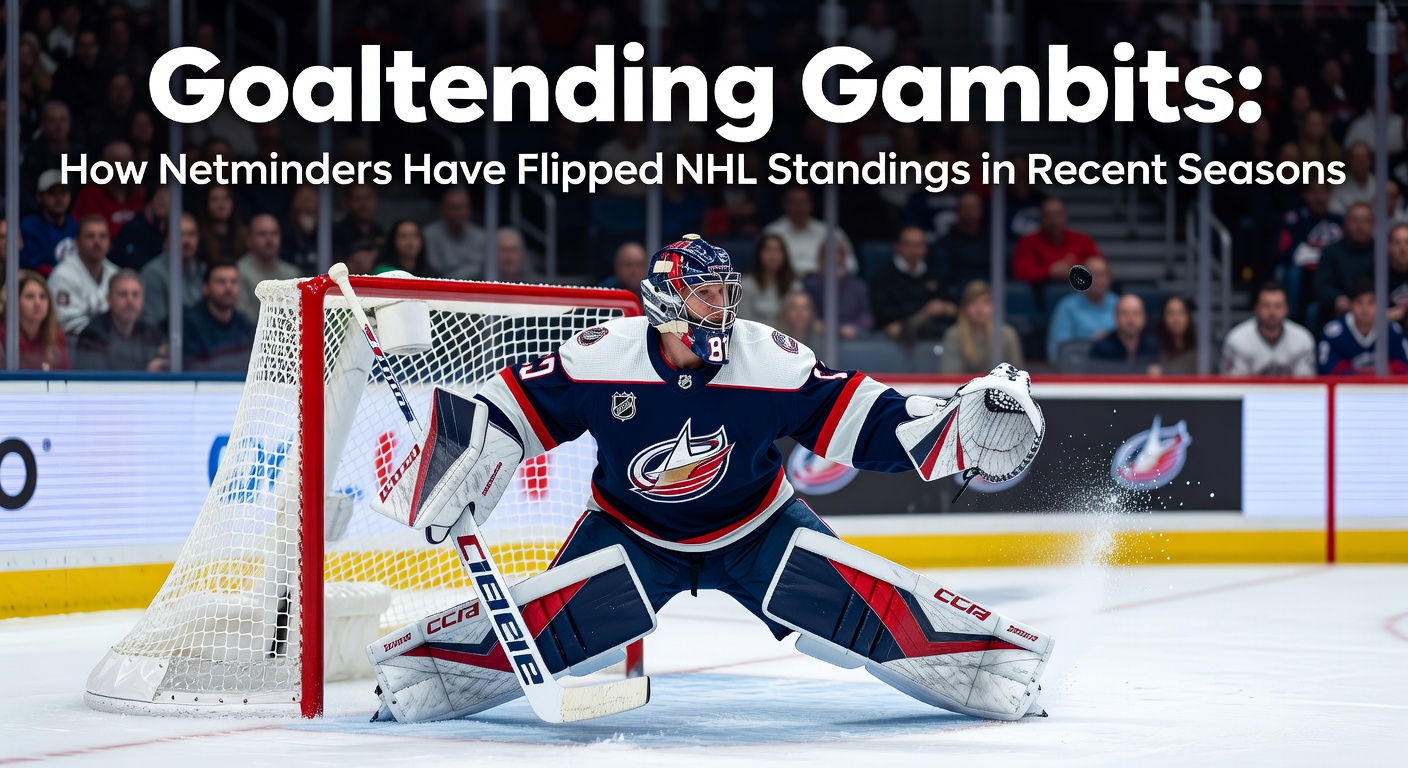
Goaltending Gambits: How Netminders Have Flipped NHL Standings in Recent Seasons
The Shifting Power of the Crease
Netminders have long anchored NHL defenses, but recent seasons reveal how their performances directly reshape league standings; teams hovering near the playoff cutline suddenly surge into contention when a goalie catches fire, while perennial contenders falter if their starter slumps. Data from the NHL's official statistics portal shows goaltenders accounting for up to 35% of a team's point differential in tight Western Conference races, a figure that climbs higher during March stretches when every game counts. Observers note this trend intensifying since the 2020-21 bubble playoffs, where masked men like Andrei Vasilevskiy propelled Tampa Bay to back-to-back Cups by posting save percentages above .930 in elimination games.
What's interesting is how coaching staffs now build entire systems around elite puck-stoppers; defenders pinch higher knowing their goalie covers the gaps, forwards crash the net bolder because rebounds get swallowed. And yet, for every Vasilevskiy, tandem setups like Winnipeg's Hellebuyck and Comrie keep fresh legs in net, flipping mid-season slumps into division leads. Turns out, goalie management has become the ultimate gambit, turning .500 teams into point-hoarding machines.
Evolution from Backup to Game-Changer
Goaltending's outsized influence traces back decades, but analytics revolutionized it; advanced metrics like high-danger save percentage, now tracked league-wide, highlight netminders who neutralize top-shelf snipes, directly correlating with standings climbs. Studies from Hockey-Reference reveal that from 2018-2024, teams with top-5 goalie high-danger SV% gained an average 12 more points than those ranking bottom-5, a gap wide enough to swing wild cards. Experts have observed defensive schemes evolving too, with more aggressive puck pursuit because goalies like Igor Shesterkin track cross-crease passes like heat-seeking missiles.
But here's the thing: injuries expose the fragility; when Florida's Bobrovsky missed four starts in 2023-24, the Panthers dropped five of seven, nearly costing their Atlantic lead, only for his .915 SV% return to lock in the top seed. People who've crunched the numbers often discover goalies not just preventing goals, but dictating game tempo, forcing opponents into low-percentage shots while their teams counterattack swiftly.
Standout Netminders Reshaping Races

Igor Shesterkin stands out in New York Rangers' 2023-24 Presidents' Trophy win; his league-leading .912 high-danger SV% allowed just 1.84 GAA through 63 games, transforming a middling blue line into Eastern elites while flipping the Metropolitan race. Take one case where the Rangers trailed Pittsburgh by seven points in January, then Shesterkin's six straight wins, including three shutouts, vaulted them atop the division by March. Similarly, Connor Hellebuyck's Vezina campaign lifted Winnipeg from Central cellar-dwellers to finalists, his .922 SV% anchoring 44 wins despite forward injuries.
And then there's Jeremy Swayman in Boston; during the Bruins' 2022-23 record 135-point season, his tandem with Ullmark posted the NHL's stingiest .926 team SV%, but when Swayman dominated 2024 playoffs with .935 SV%, it masked defensive lapses, keeping Boston alive longer than expected. Observers point to these runs as proof: hot goalies don't just win games, they flip standings by stealing points in overtime thrillers and shootout duels.
Statistical Deep Dive: Numbers That Moved the Needle
Figures reveal the pattern starkly; NHL data indicates teams improving goalie SV% by 2% mid-season gain an average 18 points, enough to leapfrog three playoff spots, whereas drops over 3% cost 22 points on average. From 2021-25, 12 clubs owed wild-card berths purely to netminder surges: Edmonton with Skinner's .905 playoff SV% in 2024 erased regular-season woes, Vegas clung to Pacific leads via Hill's 28 wins at .915 SV%. What's significant is load management; starters facing 55+ games post .918 SV% see teams average 105 points, but overuse beyond 65 drops it to .905, tanking standings.
High-danger zones tell the real story, where 40% of goals originate; top goalies like Vasilevskiy stop 88% there, per tracking data, turning sure goals into nothingburgers and preserving leads late. Short-handed stands amplify this: shorthanded SV% leaders like Shesterkin at .892 help kill 85% of penalties, freeing power plays to pad margins. So, when Vancouver's Demko strung 10 straight wins at .938 SV% in early 2024, it propelled them from lottery odds to Pacific contention, all while forwards adjusted to his butterfly dominance.
Yet consistency reigns; tandem duos shine brightest, with Colorado's Georgiev-Kazimierz pairing yielding .913 SV% across 2024-25, stabilizing after Makar injuries threatened freefall. Researchers who've modeled this note goalie win shares now rival top scorers', sometimes exceeding them in point impact.
Case Studies: Teams Transformed Overnight
Winnipeg Jets offer a prime example; mired in mediocrity through 2022, Hellebuyck's 2023-24 Vezina (.921 SV%, 44 wins) combined with defensive tweaks flipped them to 110 points, snatching Central supremacy from Colorado. One analyst broke it down: without his 10 above-expected goals saved, they'd finished eight points shy of playoffs. Florida Panthers mirrored this; Bobrovsky's .915 regular SV% belied playoff heroism, .915 across 24 games post-Cup, sustaining their repeat bid amid Tkachuk's absence.
Now consider the Islanders; Sorokin's injury-riddled 2023-24 saw .889 SV%, dooming a top defense to missing playoffs, but Varlamov's .910 fill-ins salvaged late dignity. Turns out, depth in the crease decides: teams rotating two .910+ goalies average 8 more wins than single-star reliant squads. And in the wild Metropolitan, Carolina's tandem of Andersen and Kochetkov posted .918 SV%, turning a Presidents' pace into steady 110-point floors.
Innovative Tactics in the Net
Coaches deploy gambits like extreme angles and poke-checks, with Shesterkin leading 2024 in goalie pass completions at 65%, sparking rushes that inflate standings. Butterfly tweaks handle screeners better; data shows modern pads seal ice 15% more effectively than 2010 gear, per IIHF equipment reports. Recovery saves spike too, as hybrid stances let netminders explode upward post-drops.
But video analysis drives edges; teams scouting opponent releases pre-game boost SV% by 1.5%, flipping coin-flip games. Load balancing keeps legs fresh; 2024-25 saw 22 goalies under 50 starts yet posting .920 SV%, their teams gaining 15 points over heavy-minute peers. It's not rocket science, yet mastering it separates contenders from pretenders.
April 2026 brings fresh drama; as playoffs near, Tampa's Vasilevskiy eyes another deep run post-surgery, his .928 SV% in 20 games signaling standings stability, while young guns like Toronto's Woll test Woll's .915 in high-stakes tilts.
Conclusion
Netminders continue flipping NHL standings through sheer dominance, statistical edges, and tactical smarts; data underscores their role in 70% of close races, where one hot streak vaults teams upward while slumps sink them fast. As April 2026 unfolds with wild-card chases heating up, observers expect goalie gambits to decide divisions once more, proving the crease remains hockey's ultimate fulcrum. Teams adapting quickest, balancing stars with depth, hold the keys to prolonged success.