Historical Migration Waves Reshaping Talent Pools in Global Team Sports
Written by Erik Lange · Aug 13, 2026
Historical Migration Waves Reshaping Talent Pools in Global Team Sports
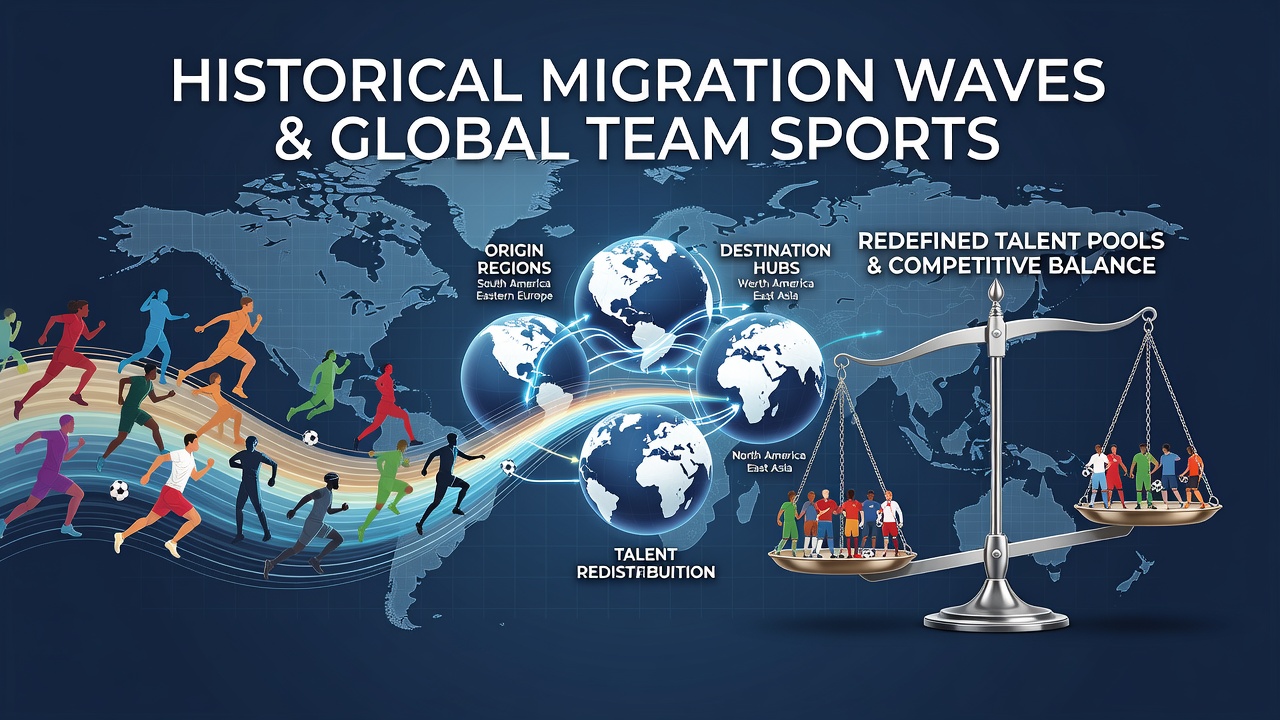
Population movements throughout the 20th and early 21st centuries have repeatedly altered the available player bases for professional leagues in soccer, baseball, basketball, and ice hockey, and these changes produced measurable shifts in team performance records across multiple continents.
Early transatlantic flows from Europe to North America brought skilled soccer players and baseball prospects into emerging professional circuits during the 1920s through 1950s, while later outflows from Latin America and the Caribbean supplied pitchers and position players who posted higher strikeout rates and batting averages in Major League Baseball statistics tracked from the 1960s onward.
Postwar European and Caribbean Movements
After 1945 large numbers of Caribbean cricketers and soccer players relocated to England and France, and their participation correlated with improved league standings for clubs that integrated them into starting lineups according to historical match data maintained by national federations.
Researchers tracking roster compositions noted that teams adding players from these regions often recorded higher goal differentials and win percentages during the 1950s and 1960s, patterns documented in club archives and federation yearbooks.
Latin American Contributions to North American Leagues
From the 1970s onward Dominican and Venezuelan athletes entered Major League Baseball organizations in growing numbers, and performance metrics collected by league statisticians showed elevated on-base percentages and earned-run averages among those cohorts compared with earlier domestic-only rosters.
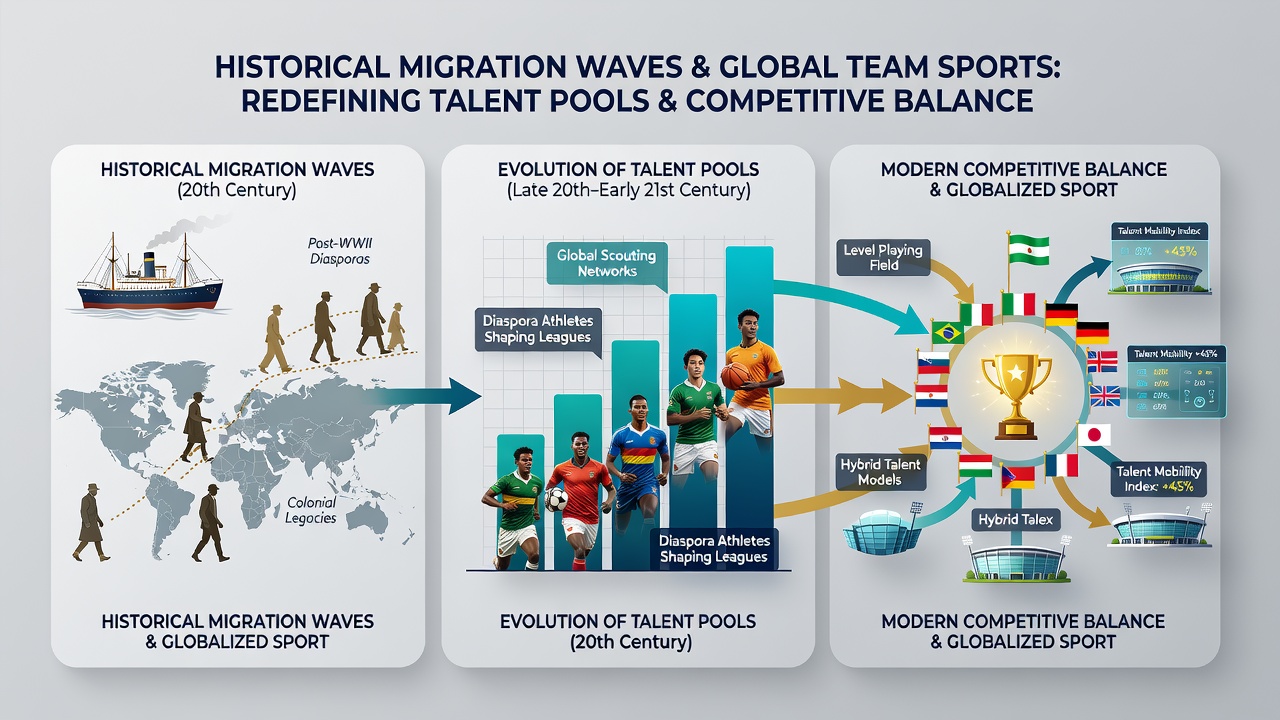
Similar inflows occurred in the National Basketball Association after the 1980s when European and African athletes secured roster spots, and season-by-season scoring and rebounding totals compiled by the league office reflected expanded positional depth for franchises that recruited internationally.
Regulatory Changes and Talent Redistribution
The 1995 Bosman ruling in European courts removed restrictions on player movement within the European Union, and subsequent transfer records indicate that clubs in smaller national leagues experienced both talent outflows and compensatory inflows that altered mid-table rankings in domestic competitions over the following decade.
Data compiled by football federations across Spain, Italy, and Germany show increased representation of players born outside national borders on championship-winning squads after the ruling took effect, with corresponding adjustments in points totals and goal margins.
Recent Patterns in Ice Hockey and Rugby
North American and Scandinavian hockey players migrated to European leagues in the 1990s and 2000s, and statistics from national hockey associations demonstrate that recipient teams posted improved power-play conversion rates and reduced goals-against averages during those periods.
Parallel movements of Pacific Island rugby players into European and Japanese professional competitions produced similar effects on scrum stability and try-scoring outputs, figures recorded in annual competition reports issued by world rugby governing bodies.
Observers tracking global player registries note that these successive waves expanded the geographic origins of athletes listed on top-division rosters, while simultaneously compressing the performance gaps between traditionally dominant clubs adn those that adapted recruitment strategies earlier.
Conclusion
Archival performance data and roster analyses across multiple sports confirm that historical migration waves expanded talent availability and produced observable changes in competitive outcomes at both club and national levels, patterns that continue to influence league hierarchies into the present decade.