How Broadcast Revenue Splits Have Redefined Talent Distribution Patterns Among Franchises in Multiple Leagues
Written by Klara Jung · Jun 7, 2026
How Broadcast Revenue Splits Have Redefined Talent Distribution Patterns Among Franchises in Multiple Leagues
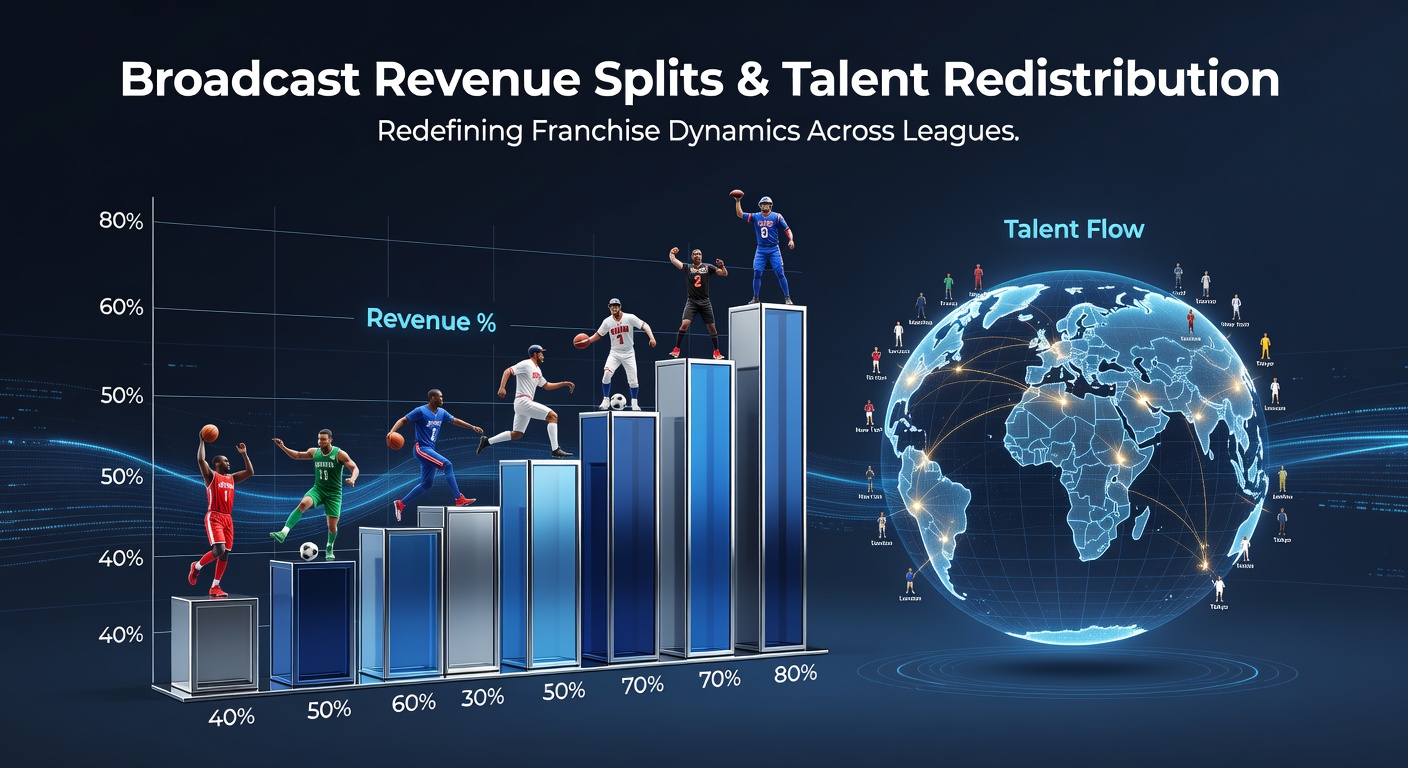
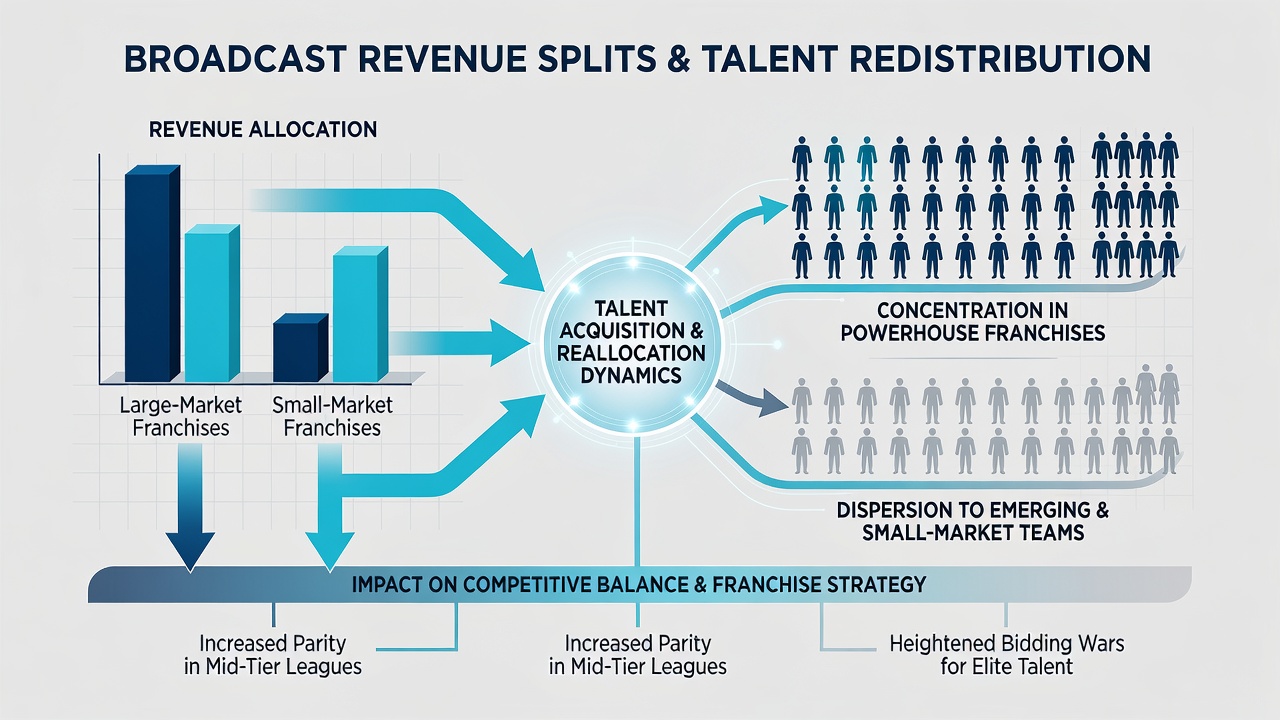
League executives have adjusted broadcast revenue allocation formulas over the past decade, and these changes have altered how franchises assemble rosters in the NFL, NBA, MLB, and European soccer competitions. Teams once concentrated spending in large media markets now face caps that redirect portions of national television deals toward smaller-market clubs, which creates new patterns in free-agent signings and draft selections.
Broadcast Deal Structures Across Major Leagues
National television contracts generate the bulk of shared income in North American leagues, whereas European soccer relies more on collective domestic and international rights packages that distribute funds through governing bodies. In the United States, the NFL divides its media revenue equally among 32 franchises after certain deductions, while the NBA allocates roughly half its national media income on a per-team basis with performance incentives layered on top. MLB operates a central fund that redistributes local and national broadcast proceeds according to a formula weighted by market size and attendance metrics, and observers note that this system has produced measurable shifts in payroll distribution since the most recent collective bargaining agreement took effect.
European leagues follow different models where the Premier League pools international broadcast income and distributes it through equal shares plus merit payments, yet domestic rights remain heavily skewed toward the so-called big six clubs. Data compiled by league offices shows that mid-table teams have used their increased shares to retain academy graduates and sign mid-level free agents rather than compete directly for the highest-paid stars, which alters traditional talent migration routes between divisions.
Effects on Roster Construction and Player Movement
Franchises in smaller markets have gained leverage in contract negotiations because shared revenue guarantees predictable income streams that support long-term deals. Researchers tracking free-agent signings between 2020 and 2025 found that clubs outside the top ten media markets increased their average annual payroll commitments by 18 percent in the NBA and 14 percent in MLB, while large-market teams moderated spending on aging veterans in favor of younger, cost-controlled talent. This redistribution has produced more even competitive balance indices published by league statisticians each season.
European soccer provides a contrasting example where broadcast splits have encouraged clubs in the Bundesliga and Serie A to invest shared funds in scouting networks across South America and Africa. One study released by the European Club Association documented a 22 percent rise in non-EU player registrations among mid-tier clubs since 2022, coinciding with expanded international media deals that boosted revenue sharing percentages. Those clubs now compete more effectively for emerging talent before larger Premier League or La Liga sides enter the market.
Regional Variations and Recent Developments
North American leagues continue to refine revenue formulas ahead of upcoming media negotiations scheduled for 2027, while European competitions adjust internal distribution rules to address competitive gaps between divisions. As of June 2026, preliminary reports from league offices indicate that revised sharing percentages in the Premier League have already directed an additional £120 million annually toward clubs finishing between eighth and fourteenth place, and those funds have appeared in transfer activity during the winter window.
Canadian and Australian professional leagues have adopted elements of these models on a smaller scale. The Canadian Football League ties a portion of its national broadcast contract to player salary caps that favor teams in less populous provinces, and data released by the league shows improved retention rates for Canadian-developed players. Similarly, the Australian Football League distributes media revenue through a combination of equal shares and performance metrics that have supported stronger academy investments outside Melbourne and Sydney.
Long-Term Patterns in Talent Pipelines
Scouting departments have responded by reallocating resources toward regions where shared revenue enables sustained development spending. Academies in lower-revenue markets now receive larger portions of league-wide funds earmarked for youth programs, which produces a broader base of draft-eligible athletes in North American sports and more academy graduates available for first-team minutes in Europe. Figures released by European Commission sport policy documents confirm that mid-sized clubs increased their proportion of homegrown players on matchday squads by an average of nine percentage points between 2021 and 2025.
Salary cap mechanics interact directly with these revenue splits, because shared income counts toward the cap in most leagues while locally generated revenue often faces different treatment. This interaction encourages teams to front-load contracts for star players during high-revenue seasons and back-load deals when future media rights values remain uncertain. League tracking systems show that average contract lengths for players aged 28 and older have shortened by nearly one year across the four major North American leagues since 2019, reflecting caution tied to fluctuating broadcast income projections.
Conclusion
Broadcast revenue redistribution has produced measurable changes in where talent lands and how long it stays with any given franchise. Smaller-market teams now secure and retain players who previously gravitated exclusively toward large media centers, while traditional powers adjust their acquisition timelines to account for the new financial landscape. These patterns continue to evolve as leagues finalize the next generation of media agreements, yet the core mechanism of shared national and international rights remains the primary driver reshaping roster construction across multiple competitions.