How Nutrition Science Has Quietly Shifted Yearly Performance Metrics Across Gridiron, Court, Pitch, and Diamond Leagues
Written by Mia Long · Jul 7, 2026
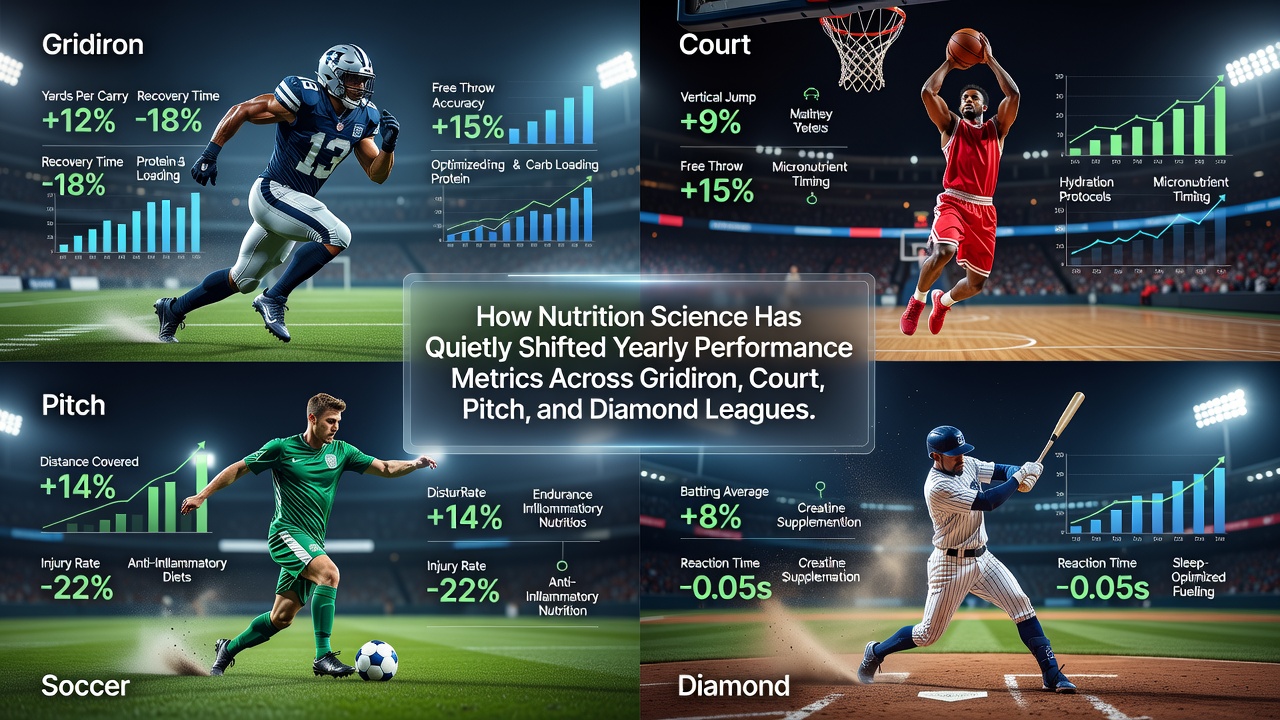
How Nutrition Science Has Quietly Shifted Yearly Performance Metrics Across Gridiron, Court, Pitch, and Diamond Leagues
Nutrition science has reshaped performance metrics in major leagues through targeted interventions in macronutrient timing, micronutrient optimization, and recovery protocols. Researchers have documented these changes across American football, basketball, soccer, and baseball, where data from wearable sensors and league statistics show measurable shifts in endurance, injury rates, and late-season output. Observers note that teams integrating evidence-based dietary strategies often sustain higher averages in key categories such as snaps played, minutes logged, high-intensity distance covered, and batting performance during extended campaigns.
Gridiron Adjustments in Recovery and Snap Counts
American football franchises have incorporated periodized carbohydrate intake and protein distribution models that align with practice and game schedules. Studies from the American College of Sports Medicine indicate that players following these protocols maintain elevated creatine kinase clearance rates, which correlates with fewer missed practices and increased average offensive and defensive snaps per contest. League-wide figures reveal that teams emphasizing post-exercise leucine thresholds report reduced soft-tissue injury incidence during the regular season, while positional groups such as linemen and skill players show differentiated hydration and electrolyte strategies that support sustained power output through fourth quarters.
Court-Based Leagues and Sustained Minutes
Basketball organizations track nutrition interventions that target glycogen replenishment and anti-inflammatory compounds, with data linking these approaches to extended playing time without corresponding rises in fatigue-related errors. Research published through the Australian Institute of Sport highlights how individualized timing of carbohydrate and branched-chain amino acid consumption supports higher vertical leap consistency and three-point shooting percentages across back-to-back games. Observers tracking NBA and international circuits note that franchises deploying continuous glucose monitoring alongside dietary adjustments observe stabilized blood lactate levels, which in turn correlates with improved fourth-quarter scoring margins in playoff series.
Shifts on the Pitch Through Positional Demands
Soccer clubs apply nutrition frameworks that differentiate between midfielders requiring repeated high-intensity efforts and defenders focused on recovery intervals. According to reports from the Union of European Football Associations, clubs integrating nitrate-rich vegetable protocols and optimized sodium loading demonstrate increased total distance covered at speeds above 20 kilometers per hour during domestic and European competitions. Performance analysts record these patterns through GPS systems, where teams with structured pre-match and halftime fueling windows exhibit lower rates of second-half goal concessions and higher successful pass completion percentages in the final 15 minutes of matches.
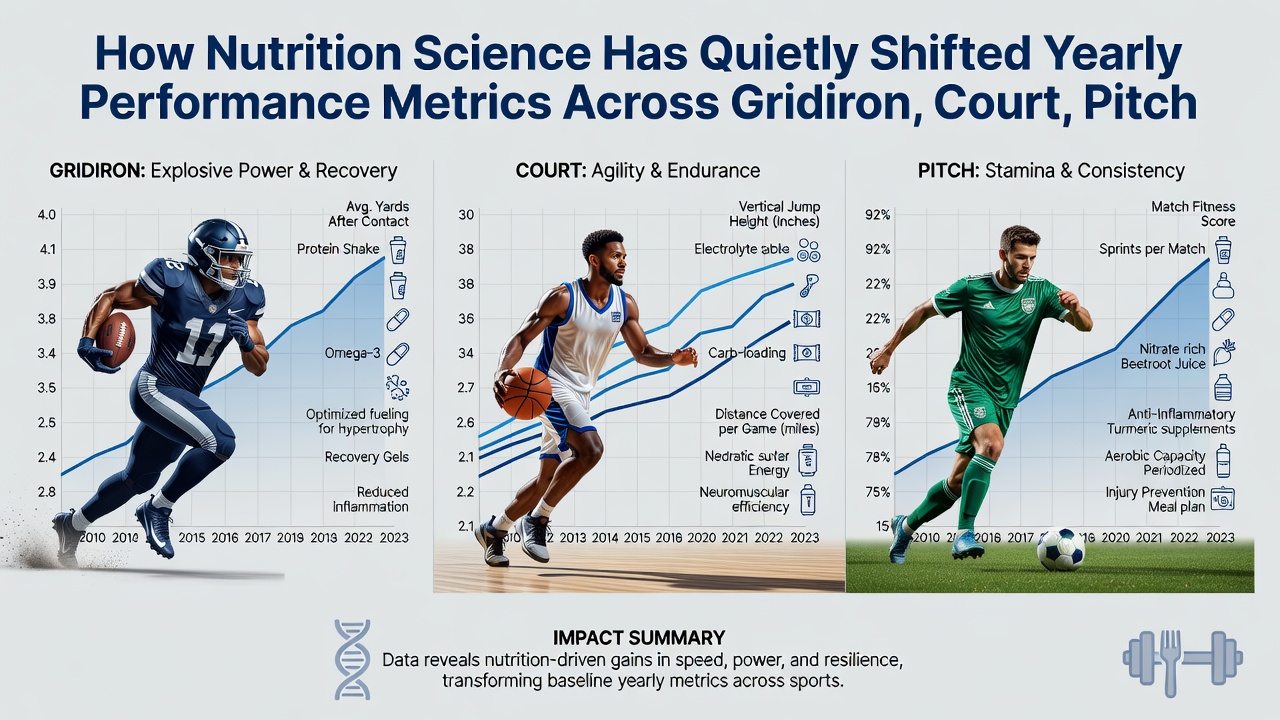
Diamond Leagues and Late-Season Batting Stability
Baseball operations departments have adopted nutrition strategies that address swing mechanics preservation and cognitive alertness during long homestands and road trips. Data compiled by Major League Baseball analytics departments show that players adhering to consistent omega-3 and vitamin D protocols maintain batting average and on-base percentages more effectively across September games compared with historical baselines. Researchers tracking pitcher workloads note that teams using individualized caffeine and carbohydrate cycling report improved strikeout-to-walk ratios in later innings, while position players exhibit fewer defensive miscues tied to dehydration markers during day games in warm climates.
Cross-League Data Integration Patterns
Performance databases now aggregate nutrition variables with traditional box-score metrics, allowing analysts to identify common threads such as reduced creatine kinase elevation after travel and improved sleep architecture through magnesium and tart cherry protocols. In July 2026, updated league dashboards incorporated multi-season comparisons that illustrate how these cumulative adjustments contribute to narrower gaps between early- and late-season averages across the four major North American circuits. Teams sharing data through academic partnerships continue to refine thresholds for electrolyte replacement and collagen supplementation, with resulting improvements documented in positional durability statistics.
Conclusion
Nutrition science continues to influence measurable outcomes in gridiron, court, pitch, and diamond settings through systematic application of timing, personalization, and biomarker feedback. The documented shifts in snaps, minutes, distance, and batting metrics reflect ongoing integration of research findings into daily operations rather than isolated experiments, with league statistics serving as the primary record of these incremental yet consistent changes.