How Travel Schedules and Time Zone Adjustments Influence Win Rates in National Sports Leagues
Written by Mia Long · Jul 21, 2026
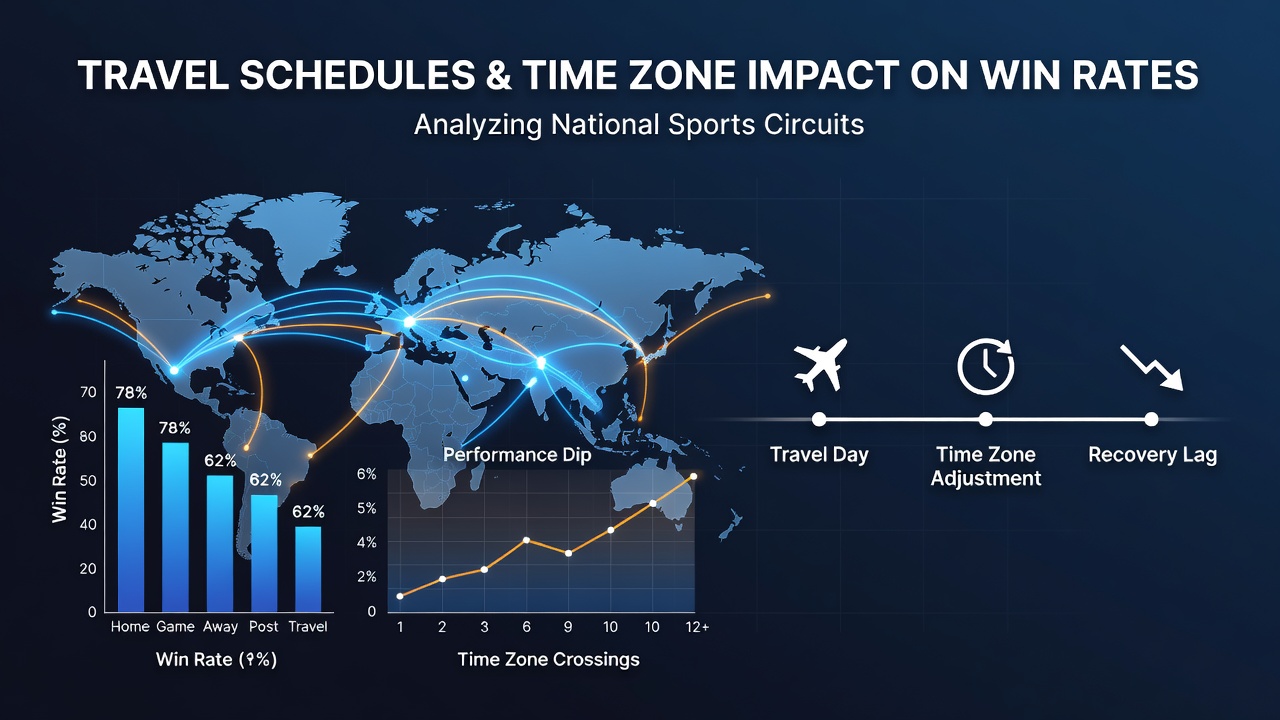
How Travel Schedules and Time Zone Adjustments Influence Win Rates in National Sports Leagues
National sports circuits in North America face persistent challenges from extensive travel demands, where crossing multiple time zones disrupts circadian rhythms and correlates with measurable shifts in team performance metrics. Researchers have tracked these patterns across the NBA, MLB, NHL, and NFL for decades, noting that eastward flights often produce sharper declines in win percentages compared to westward journeys because the body struggles more with phase advances than delays. Data from league schedules in the 2025-2026 seasons continues to illustrate these effects, and observers note that July 2026 preparations for upcoming campaigns already incorporate adjusted recovery protocols based on prior travel analyses.
Patterns in Cross-Country Travel and Performance Metrics
Teams based on the West Coast encounter different physiological demands when heading east for games, since they lose hours rather than gain them, and studies compiled by sports medicine groups show win rates dropping by an average of 3 to 5 percentage points in the first 48 hours after such trips. The NBA provides clear examples through its dense schedule that requires frequent flights between Pacific and Eastern time zones, whereas the MLB spreads games over longer stretches yet still records similar dips during interleague play that spans the continent. Those who've examined box scores over multiple seasons find that home teams gain an added edge when visitors arrive from three or more zones away, particularly in evening contests where fatigue compounds.
Data from League Records and Academic Reviews
Analysis of NHL standings reveals that teams traveling from Central to Pacific time zones maintain closer to their season averages, while eastward movements correlate with higher goals allowed in the opening periods of back-to-back games. Academic reviews from institutions such as McGill University have quantified these outcomes by aligning travel logs with player tracking data, and figures reveal that recovery windows shorter than three days amplify the effects across endurance positions like defensemen and starting pitchers. In the NFL, where games occur weekly, the impact appears in Sunday night matchups following Thursday travel, with records showing visiting squads from distant zones posting lower point differentials on average.
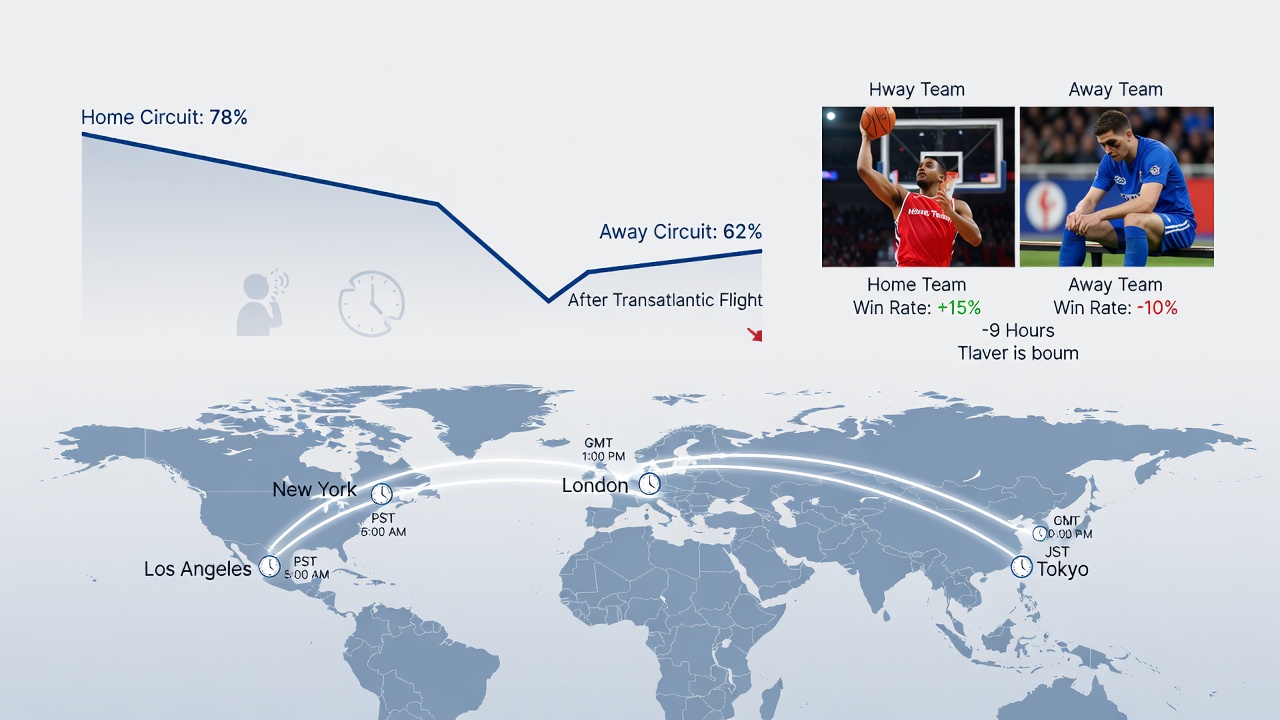
What's interesting is how these patterns extend beyond North American leagues into international circuits that feed talent pipelines, yet the core mechanisms remain tied to sleep disruption and hormonal shifts rather than venue specifics. Research indicates that melatonin suppression during eastward flights reduces reaction times in precision sports, and Canadian studies have linked such changes to elevated injury rates in subsequent matches. Observers tracking 2026 preseason camps see teams experimenting with light exposure schedules to blunt these responses before regular season travel intensifies.
Mitigation Strategies Across Circuits
League offices and franchise medical staffs have introduced structured interventions, including pre-flight sleep shifting and post-arrival light therapy, because data shows these steps narrow the performance gap for visiting clubs. The Australian Institute of Sport has contributed comparative findings from its own national teams that face similar zonal crossings during global tours, demonstrating that consistent application of recovery timelines lifts win percentages closer to baseline levels. Teams in the NBA have adopted charter flight optimizations that reduce overall travel time, and records from recent seasons reflect modest improvements in road win rates when such adjustments align with game start times.
Coaches adjust lineups more frequently after long hauls, resting key players who exhibit slower adaptation rates according to wearable device outputs, while younger athletes often recover faster and maintain higher output in the same scenarios. Those who've reviewed aggregated statistics across decades note that the advantage for home teams grows most pronounced during the latter half of seasons when cumulative fatigue from prior trips accumulates. In July 2026, several franchises plan expanded use of altitude and circadian training modules to prepare rosters for the demands ahead.
Broader Implications for Scheduling and Standings
League schedulers weigh these travel variables when constructing calendars, balancing competitive equity against broadcast demands and arena availability, yet residual effects persist in final standings because perfect symmetry remains impossible. European football circuits that incorporate transatlantic friendlies during summer windows provide additional context, with performance data indicating parallel dips upon return that mirror North American patterns. Researchers continue to refine predictive models that incorporate zonal differences, and current projections for 2026-2027 seasons already factor in these variables when estimating divisional races.
Conclusion
Travel schedules and time zone adjustments produce documented influences on win rates through physiological mechanisms that sports organizations track systematically, and ongoing refinements in recovery protocols aim to moderate those impacts across circuits. Evidence from multiple leagues and supporting academic sources demonstrates consistent directional effects that shape both individual games and seasonal hierarchies, while July 2026 preparations reflect accumulated knowledge from prior campaigns. Continued monitoring will clarify how emerging strategies alter these established relationships in future seasons.