Medical Advances Transforming Athletic Careers and Competition Results
Written by Morgan Washington · Aug 23, 2026
Medical Advances Transforming Athletic Careers and Competition Results
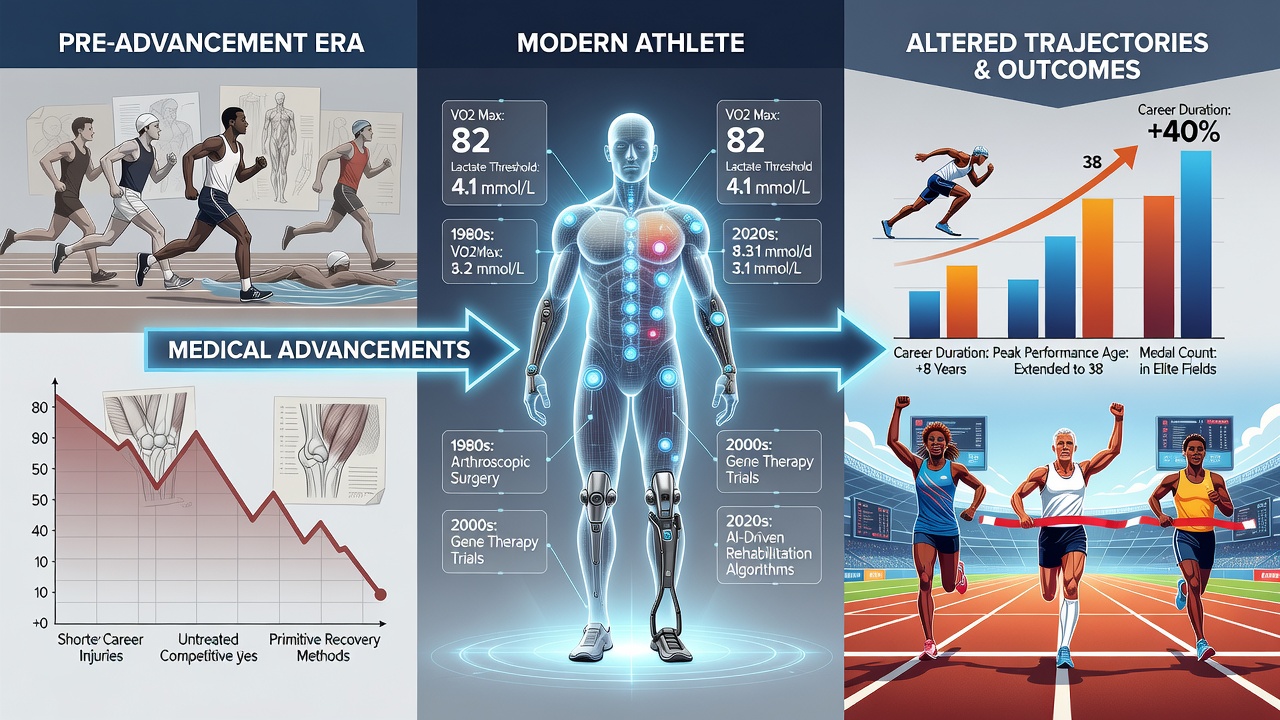
Medical advancements have shifted the landscape of elite athletics by enabling longer careers and altering outcomes in major competitions across multiple disciplines. Arthroscopic techniques developed in the 1970s and refined through the 1990s allowed precise joint repairs that previously required open surgery and extended downtime, while data from sports medicine registries show return-to-play rates climbing steadily for procedures such as anterior cruciate ligament reconstruction.
Early Surgical Milestones and Career Extensions
Tommy John surgery first performed in 1974 demonstrated that ulnar collateral ligament replacement could restore pitching velocity for baseball players who once faced retirement. Follow-up studies tracking Major League Baseball pitchers indicate that post-surgery careers averaged longer than pre-1980 baselines when combined with modern rehabilitation timelines. Similar patterns emerged in soccer after the introduction of minimally invasive meniscus repairs in the late 1980s, where longitudinal tracking by European football federations recorded fewer early exits among midfielders and defenders.
Researchers at institutions in North America and Australia documented how these interventions reduced re-injury rates when paired with structured loading programs. Athletes who underwent such procedures in the 1990s often competed into their late thirties, reshaping roster planning and contract structures in professional leagues.
Concussion Management and Rule Adjustments
Concussion protocols standardized after 2010 incorporated baseline neurocognitive testing and graduated return-to-play steps that changed participation patterns in contact sports. National Hockey League and National Football League data collected through 2025 reveal fewer repeat concussions among players adhering to the updated guidelines, which in turn supported extended seasons for veterans previously sidelined by cumulative head impacts. These protocols drew from collaborative work involving Canadian and Scandinavian research groups that emphasized objective symptom tracking over subjective reporting alone.
Imaging advancements such as diffusion tensor MRI further refined diagnosis by identifying microstructural changes invisible on standard scans. Observers note that players cleared under these enhanced criteria contributed to different team standings in playoff races during the 2020s compared with earlier decades when clearance timelines were shorter.
Regenerative Therapies and Recovery Acceleration
Platelet-rich plasma injections and stem-cell therapies gained adoption after regulatory approvals in the United States and European Union during the 2010s. Studies published by orthopedic research centers show accelerated tendon healing in elite runners and tennis players, allowing competition schedules that previously required multi-month absences. One analysis of track and field records from 2015 onward indicates more athletes achieving personal bests after age thirty when regenerative treatments supplemented traditional physical therapy.
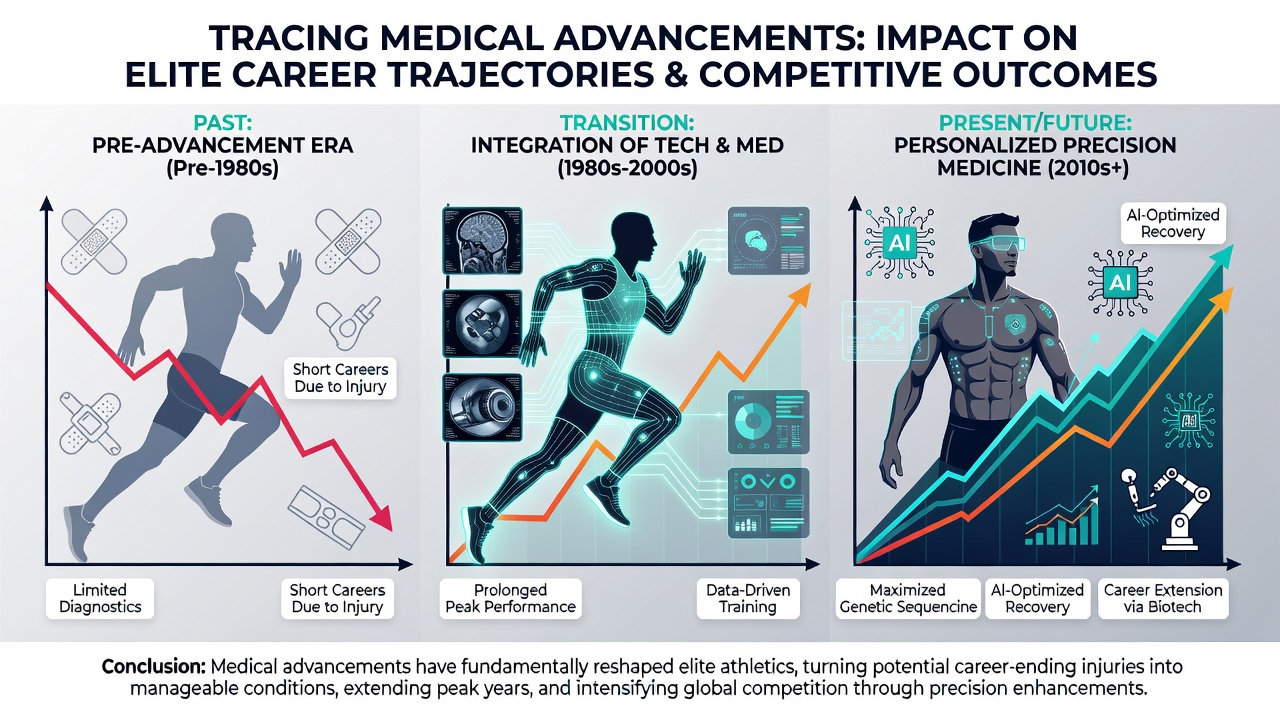
By August 2026, wearable sensor integration with these therapies enabled real-time load adjustments that further reduced downtime across endurance and power sports. Figures from international athletic federations highlight corresponding shifts in age distributions among medalists at world championships.
Effects on Competitive Hierarchies
Teams and national programs that adopted comprehensive medical monitoring systems recorded measurable advantages in seasonal standings. Basketball franchises investing in load-management platforms tied to cardiac and musculoskeletal data experienced fewer player absences during critical stretches, according to league-wide injury surveillance reports. Similar patterns appeared in cycling, where anti-doping advancements combined with therapeutic use exemptions supported sustained performance among riders who once faced forced retirements.
Cross-sport comparisons compiled by academic consortia in Asia and South America illustrate how access to these technologies widened performance gaps between well-resourced organizations and others. Talent pipelines feeding into top leagues increasingly factored medical histories into scouting evaluations, altering draft selections and international transfers.
Conclusion
Medical progress continues to influence which athletes sustain elite output and which competitions see revised records. Ongoing refinements in imaging, biologics, and data-driven rehabilitation maintain these trajectories while regulatory bodies across regions monitor safety thresholds. The cumulative record shows measurable extensions in career length alongside altered outcome distributions in professional and Olympic events.