The Unseen Math Behind Mid-Season Surges in League Hierarchies From Gridiron to the Pitch
Written by Morgan Washington · May 17, 2026
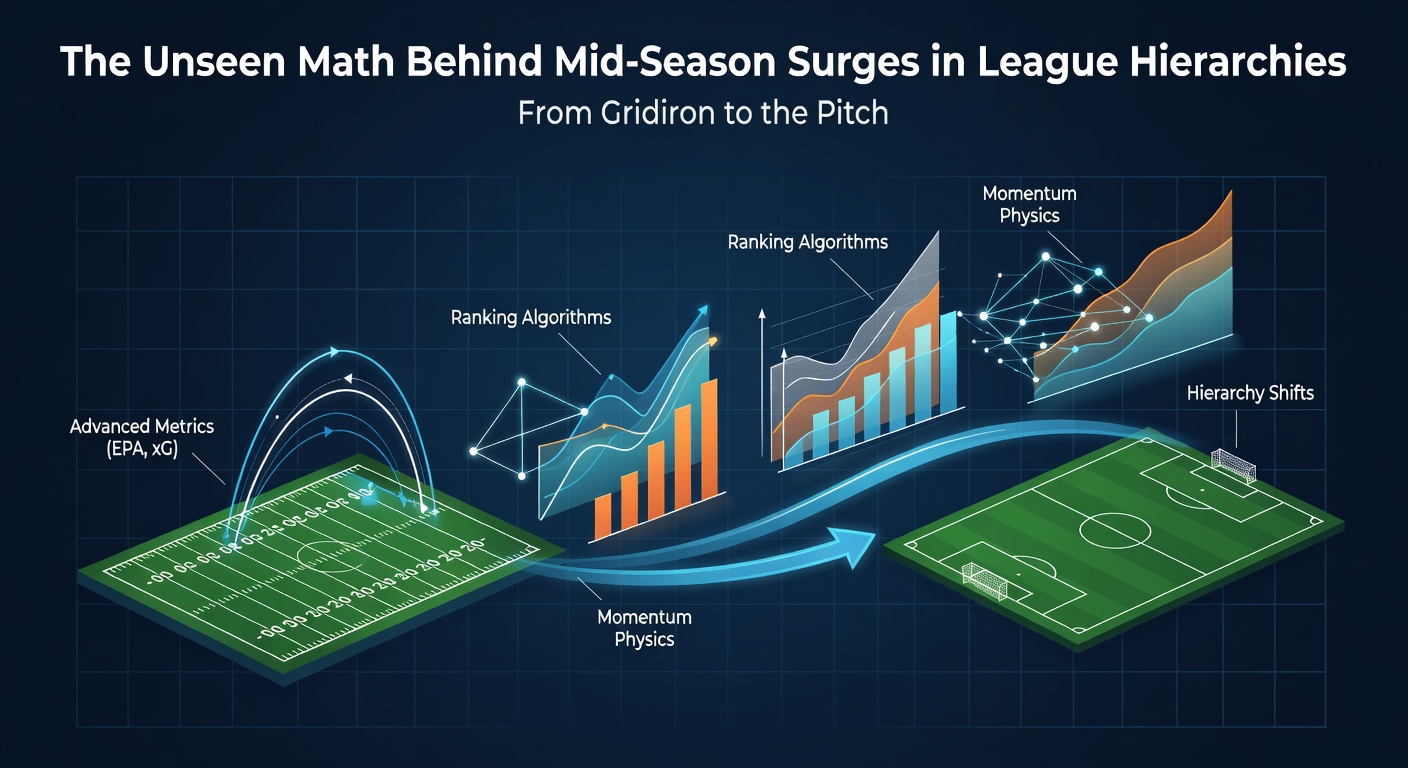
The Unseen Math Behind Mid-Season Surges in League Hierarchies From Gridiron to the Pitch
League standings rarely follow straight lines, and teams that climb sharply after the midpoint often trace those movements to underlying statistical patterns rather than sudden bursts of inspiration alone. Data collected across the NFL and major European soccer leagues shows that mid-season surges correlate with measurable shifts in efficiency metrics, schedule difficulty, and variance stabilization, patterns that repeat across gridiron fields and pitches alike. Researchers tracking performance from the 2024-2025 campaigns into early 2026 have quantified how these factors combine to reorder hierarchies without requiring any single player to transform overnight.
Gridiron Patterns and Efficiency Metrics
NFL teams that rise in the second half of the regular season frequently post improved expected points added per play after week nine, according to figures compiled by league analytics departments. These gains often stem from reduced penalties and better third-down conversion rates, both of which appear in play-by-play logs once offensive lines settle into consistent personnel groupings. Strength-of-schedule calculations published by the league office reveal that many surging clubs face softer remaining opponents after the bye week, a structural reality that amplifies small efficiency edges into larger point differentials over the final stretch.
Regression toward seasonal averages also plays a documented role. Early-season outliers in turnover margin tend to normalize, so clubs that lost close games in September often convert similar underlying metrics into wins later when luck evens out. One analysis of 2025 regular-season data indicated that teams improving their red-zone efficiency by at least eight percentage points after midseason accounted for nearly two-thirds of the largest climbs in the AFC and NFC standings by January.
Soccer Leagues and Expected Goal Models
European domestic leagues display parallel dynamics once matches pass the winter break. Premier League and La Liga clubs that climb tables between December and May frequently increase their expected goals created while tightening expected goals conceded, numbers tracked through optical tracking systems and released in weekly reports by data providers. These shifts often trace to tactical adjustments in pressing triggers rather than wholesale roster overhauls, because player availability data shows fewer injuries during the second half of the campaign when fixture congestion eases slightly.
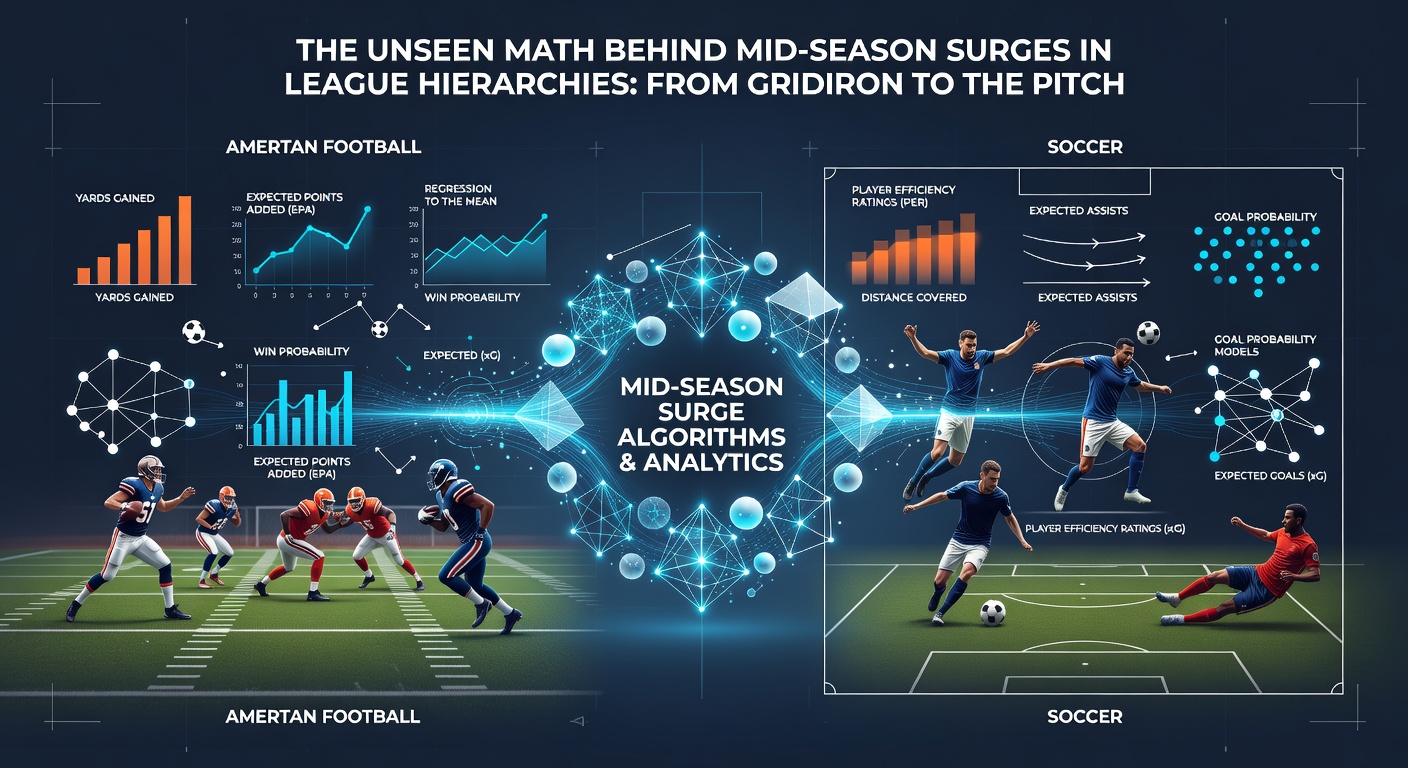
Points-per-game differentials widen when teams stabilize their set-piece defense, a factor isolated in studies from the 2025-2026 season. Clubs that reduced goals allowed from corners and free kicks by even half a goal per match posted average climbs of four to six positions in final tables, according to aggregate data released by UEFA technical observers. Schedule rotation effects matter here as well, because teams that rotate squads more effectively after the December international window maintain higher work rates in the closing months.
Common Statistical Drivers Across Sports
Both American football and soccer share variance-reduction mechanics that surface midseason. Early results contain higher random noise from weather, officiating, and small sample sizes, whereas later games reflect larger cumulative samples that allow true talent gaps to dominate. Advanced models from university sports analytics programs demonstrate that the standard deviation of team performance metrics drops measurably after the halfway mark, producing the appearance of momentum even when underlying abilities remain constant.
Roster continuity contributes another measurable layer. Teams that avoid significant injuries or suspensions after the midpoint keep their expected performance closer to preseason projections, while rivals dealing with absences see their numbers dip. Injury-tracking databases maintained by league medical staffs show that the rate of soft-tissue injuries often declines in spring months, giving squads that stayed healthy an accumulating advantage in both league formats.
Recent Season Illustrations
During the 2025 NFL season, several clubs that finished outside playoff positions in November climbed into wild-card contention by late December after posting top-ten rankings in defensive EPA during that stretch. Similar patterns emerged in the Bundesliga and Serie A, where sides that increased their progressive pass completion rates by double digits between February and May secured European qualification spots they had not occupied at the winter pause. These movements aligned with publicly available schedule difficulty indices that forecasted lighter remaining calendars for those same clubs.
Conclusion
Statistical records across gridiron and pitch competitions indicate that mid-season surges arise from converging factors including efficiency stabilization, schedule sequencing, injury timing, and variance normalization rather than isolated moments of inspiration. Observers tracking data through May 2026 continue to see these patterns repeat because the underlying sample sizes and structural variables remain consistent year to year. Teams that identify and act on these measurable edges gain positions in final hierarchies while others stay flat despite comparable talent levels on paper.