Tracing Global Talent Exports From Youth Academies and Their Effects on League Standings
Written by Mia Long · Aug 20, 2026
Tracing Global Talent Exports From Youth Academies and Their Effects on League Standings
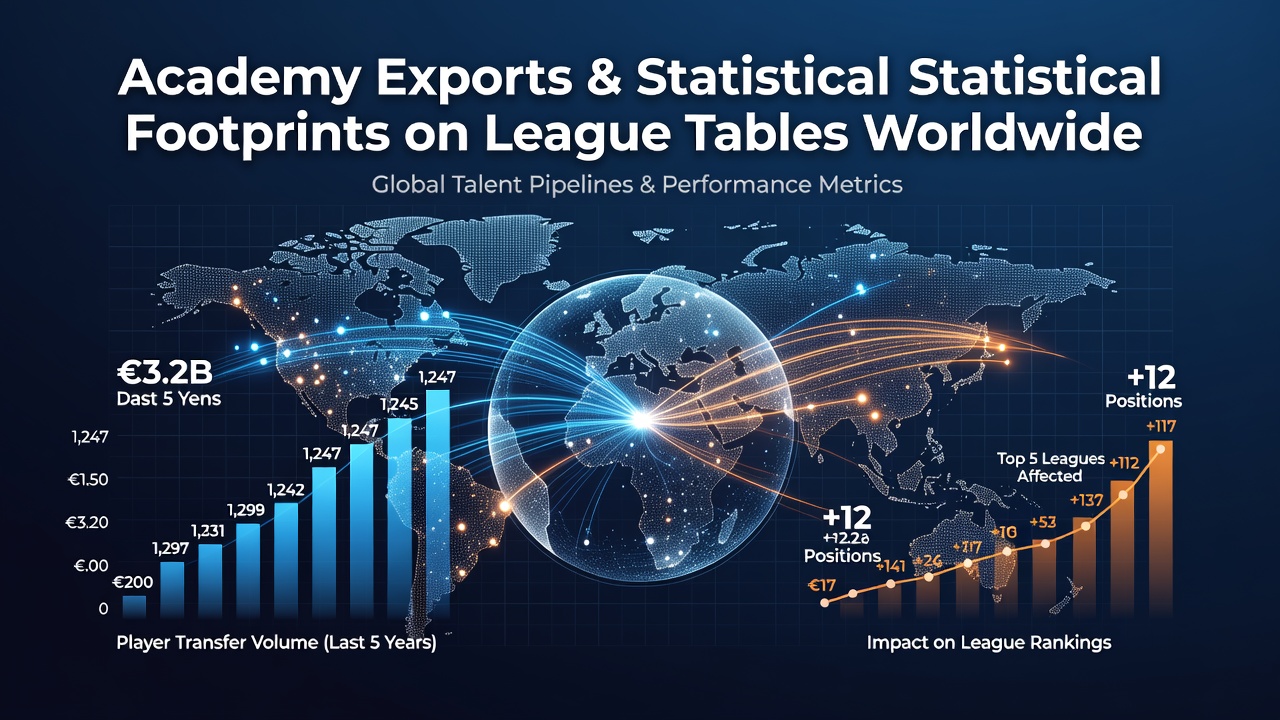
Youth academies across Europe, South America, and Africa have long supplied players to top divisions, and data from multiple seasons shows measurable shifts in league tables tied to these movements. Researchers tracking transfer records note that clubs investing in academy systems often see graduates appear in foreign leagues within three to five years, with performance metrics such as goals, assists, and clean sheets contributing to changes in final positions. Figures from the 2024-2025 campaign already indicated that several mid-table teams rose several spots after integrating academy exports from Brazil and Portugal.
Patterns in Player Migration and League Outcomes
Statistical agencies monitoring European competitions have documented how academies like those in the Netherlands and Belgium export talent at high volumes, and teams receiving these players frequently record improved goal differentials. One study covering five major leagues found that squads adding at least two academy graduates from abroad averaged a three-point gain per season compared with previous years, while defensive units benefited from lower goals conceded when young center-backs arrived from South American programs. Observers tracking these flows highlight that the timing of arrivals often aligns with mid-season surges, particularly when clubs face fixture congestion.
Regional Contributions to Standings
Leagues in England, Spain, and Italy continue to draw the largest share of academy exports, yet data reveals growing influence from African and Asian programs as well. Players developed in Senegal and Nigeria appear more regularly in French and German tables, and their goal-scoring rates have helped several clubs secure European qualification spots. Meanwhile, Japanese and South Korean academies supply midfielders whose passing accuracy metrics correlate with higher possession statistics for recipient teams in the Netherlands and Portugal. These patterns become clearer when analysts compare pre- and post-arrival league positions across multiple campaigns.
August 2026 transfer windows are expected to accelerate these trends, as clubs prepare for expanded competition formats and new financial regulations that favor homegrown or low-cost acquisitions from overseas academies. Preliminary reports already show increased scouting activity in South America and Eastern Europe, where academies produce players whose statistical profiles match the needs of teams aiming to climb league tables.
Quantitative Measures of Influence
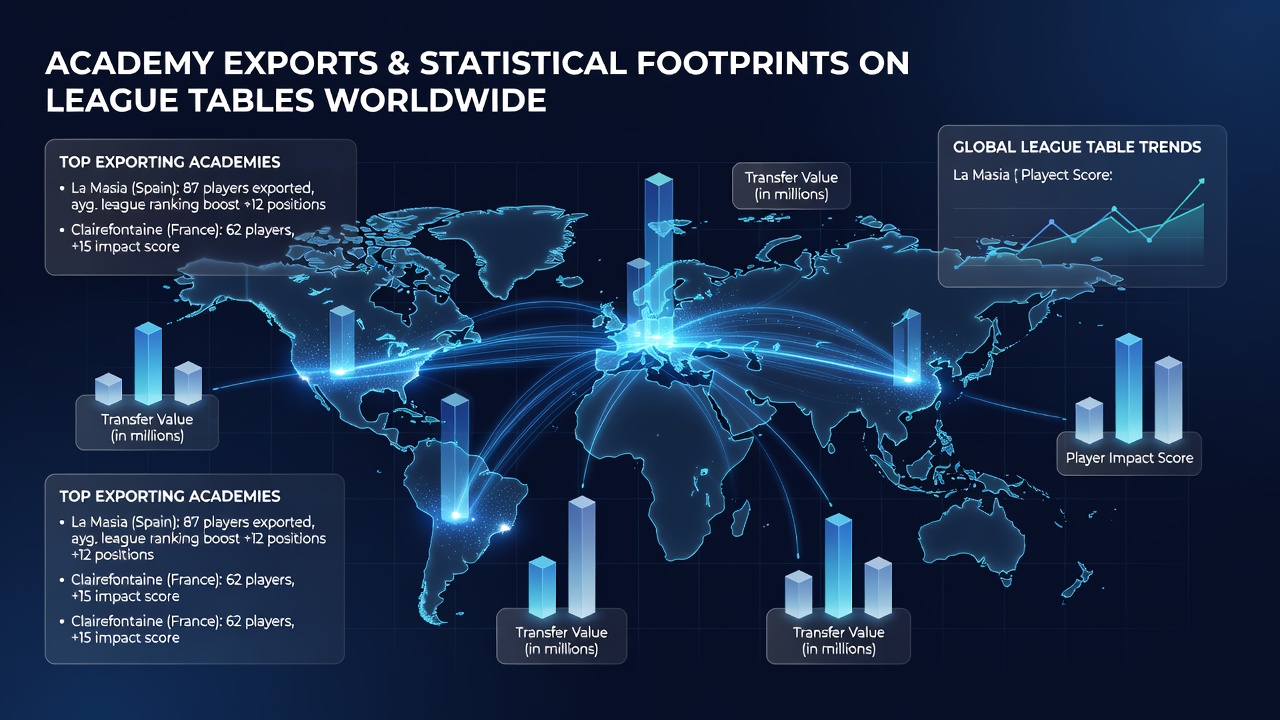
Performance databases maintained by confederations track minutes played, expected goals, and progressive passes by academy graduates, and these numbers often explain shifts in points totals. Teams that integrated graduates from top Portuguese and Dutch academies during the 2023-2025 period posted higher expected points totals than their actual results in prior seasons, according to aggregated match data. In contrast, leagues with fewer incoming academy exports recorded more stable but less dynamic table movements, with fewer dramatic climbs or drops between campaigns.
Analysts at research institutions in Australia and Canada have begun cross-referencing these European figures with domestic league outcomes, revealing that similar export patterns in the A-League and Canadian Premier League produce parallel effects on goal tallies and playoff qualification rates. The consistency across regions suggests that academy training methodologies, rather than geography alone, drive the statistical footprints observed on league tables.
Future Tracking and Data Developments
With expanded data partnerships between leagues and technology providers, future seasons will likely yield more granular insights into how specific academy cohorts influence standings. Metrics such as duel success rates and set-piece contributions from exported players are already appearing in advanced models used by clubs and media outlets. These tools allow observers to isolate the impact of academy graduates from other variables like managerial changes or squad spending.
Links between academy export volumes and league table volatility appear strongest in competitions with promotion and relegation systems, where a few high-performing additions can alter entire hierarchies. Data sets covering the last decade show that clubs relying heavily on such imports experience both faster ascents and occasional steeper declines when those players move on, creating cyclical patterns visible in historical standings.
Conclusion
Academy exports continue to leave measurable statistical marks on league tables around the world through contributions tracked in goals, assists, defensive actions, and overall team points. As transfer activity increases ahead of August 2026 and beyond, these patterns are expected to remain central to how standings evolve across continents. Researchers and league officials alike rely on expanding data sources to quantify these effects, providing clearer pictures of talent flows and their role in reshaping competitive hierarchies season after season.